DWARF 디버그 정보 분해 — DIE 트리와 .debug_abbrev
GDB가 print x라고 했을 때 x의 타입, 위치, 어떤 소스 파일에 정의됐는지를 어떻게 알까요. 답은 ELF 파일 안에 박힌 DWARF라는 디버그 정보 형식입니다. 이 정보 없이는 GDB가 그저 어셈블리 디스어셈블러에 불과합니다.
이 장은 DWARF의 정체에서 시작합니다 — DIE 트리, abbreviation 인코딩, 컴파일 유닛 구조, 그리고 TAG/AT/FORM 카탈로그. 이후 장들은 .debug_line VM, .debug_loc expression VM, CFI 등 각 섹션을 깊이 봅니다.
#DWARF의 역사와 의의
- 1988년 — DWARF 1 (Bell Labs, SVR4).
- 1992년 — DWARF 2 표준화.
- 2005년 — DWARF 3.
- 2010년 — DWARF 4 (대부분의 현대 도구가 기본).
- 2017년 — DWARF 5 (현재 최신).
C, C++, Fortran, Ada, Rust, Go, Zig, Swift 등 거의 모든 시스템 언어가 DWARF에 출력합니다. 언어 중립이 핵심 설계 의도.
Windows는 별도의 CodeView/PDB. macOS는 DWARF지만 .dSYM 번들에 별도 저장. Linux/BSD/임베디드는 ELF 안에 직접.
#DWARF의 섹션들
$ readelf -S my_prog | grep debug[35] .debug_info PROGBITS 00000000 0001234c 52431892[36] .debug_abbrev PROGBITS 00000000 00018765 234123[37] .debug_line PROGBITS 00000000 0001b234 18937451[38] .debug_str PROGBITS 00000000 0001d432 28453122[39] .debug_loc PROGBITS 00000000 0001f987 45129812[40] .debug_ranges PROGBITS 00000000 00022345 11234567[41] .debug_aranges PROGBITS 00000000 00023145 234123[42] .debug_frame PROGBITS 00000000 00023589 1234567각 섹션의 역할.
| 섹션 | 내용 | DWARF 5 변화 |
|---|---|---|
.debug_info | DIE 트리 — 메인 (이 장) | 그대로 |
.debug_abbrev | 약어 테이블 (이 장) | 그대로 |
.debug_line | PC ↔ (파일, 줄) — Ch 3 | 그대로 |
.debug_str | 문자열 풀 | + .debug_line_str |
.debug_str_offsets | 문자열 인덱스 | 신규 |
.debug_loc → .debug_loclists | 변수 위치 — Ch 4 | 이름 변경 + 포맷 |
.debug_ranges → .debug_rnglists | 주소 범위 | 동상 |
.debug_addr | 주소 풀 | 신규 (split-DWARF용) |
.debug_frame | 콜스택 unwind — Ch 5 | 그대로 |
.eh_frame | 예외 unwind (항상 있음) | 그대로 |
.debug_aranges | PC → CU 빠른 인덱스 | 선택 |
.debug_names | 빠른 심볼 검색 | 신규 (pubnames 대체) |
.debug_pubnames / _pubtypes | 공개 심볼 (deprecated) | 폐기 |
이 장은 .debug_info + .debug_abbrev + .debug_str 세 개를 다룹니다 — 다른 섹션들이 모두 이 셋을 참조하므로 기초.
#DIE — Debugging Information Entry
DWARF의 기본 단위. 트리 구조로 모든 것을 표현.
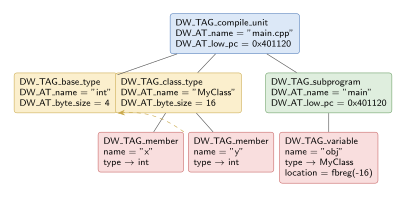
DW_TAG_compile_unit (main.cpp) DW_AT_name = "main.cpp" DW_AT_language = DW_LANG_C_plus_plus DW_AT_low_pc = 0x401000 DW_AT_high_pc = 0x401200 DW_AT_producer = "clang 17.0.0"
DW_TAG_base_type [int] DW_AT_name = "int" DW_AT_byte_size = 4│ └─ DW_AT_encoding = DW_ATE_signed│├─ DW_TAG_pointer_type [int*]│ ├─ DW_AT_byte_size = 8│ └─ DW_AT_type = ref(int)│├─ DW_TAG_class_type [MyClass]│ ├─ DW_AT_name = "MyClass"│ ├─ DW_AT_byte_size = 16│ ├─ DW_TAG_member [x]│ │ ├─ DW_AT_name = "x"│ │ ├─ DW_AT_type = ref(int)│ │ └─ DW_AT_data_member_location = 0│ └─ DW_TAG_member [y]│ ├─ DW_AT_name = "y"│ ├─ DW_AT_type = ref(int)│ └─ DW_AT_data_member_location = 4│└─ DW_TAG_subprogram [main] ├─ DW_AT_name = "main" ├─ DW_AT_low_pc = 0x401120 ├─ DW_AT_high_pc = 0x4011e0 ├─ DW_AT_type = ref(int) └─ DW_TAG_variable [obj] ├─ DW_AT_name = "obj" ├─ DW_AT_type = ref(MyClass) └─ DW_AT_location = DW_OP_fbreg(-16)각 노드(DIE)가 세 가지 속성을 가짐.
- TAG — 이 DIE가 무엇인지 (
DW_TAG_subprogram= 함수,DW_TAG_variable= 변수, …). - AT (attributes) — 이름/타입/주소 등의 속성.
- 자식 DIE (옵션).
#llvm-dwarfdump로 보기
$ llvm-dwarfdump --debug-info my_prog | head -50my_prog: file format elf64-x86-64
.debug_info contents:0x00000000: Compile Unit: length = 0x000000d6, format = DWARF32, version = 0x0005, unit_type = DW_UT_compile, abbr_offset = 0x0000, addr_size = 0x08 (next unit at 0x000000da)
0x0000000c: DW_TAG_compile_unit DW_AT_producer ("clang version 17.0.0") DW_AT_language (DW_LANG_C_plus_plus_14) DW_AT_name ("main.cpp") DW_AT_comp_dir ("/home/me/project") DW_AT_low_pc (0x0000000000401120) DW_AT_high_pc (0x0000000000401200) DW_AT_stmt_list (0x00000000)
0x0000002a: DW_TAG_base_type DW_AT_name ("int") DW_AT_encoding (DW_ATE_signed) DW_AT_byte_size (0x04)
0x00000031: DW_TAG_class_type DW_AT_calling_convention (DW_CC_pass_by_value) DW_AT_name ("MyClass") DW_AT_byte_size (0x10)
0x00000037: DW_TAG_member DW_AT_name ("x") DW_AT_type (0x0000002a "int") DW_AT_data_member_location (0x00)왼쪽의 0x0000000c 같은 숫자가 DIE의 offset. DW_AT_type = (0x0000002a) 같은 참조는 그 offset의 DIE를 가리킴.
#컴파일 유닛 (CU)
.debug_info는 여러 컴파일 유닛의 연속. 한 CU = 한 소스 파일 (보통 .c 또는 .cpp 하나).
CU 헤더.
// DWARF 5struct CU_Header { uint32_t unit_length; // 이후 데이터 길이 uint16_t version; // 5 uint8_t unit_type; // DW_UT_compile, DW_UT_partial, ... uint8_t address_size; // 4 또는 8 uint32_t debug_abbrev_offset; // .debug_abbrev로의 오프셋 // 그 다음 첫 DIE (반드시 DW_TAG_compile_unit)};CU 안의 모든 DIE의 abbrev가 debug_abbrev_offset이 가리키는 약어 표를 공유.
DWARF 4까지는 version=4, abbrev, addr_size. DWARF 5에서 unit_type 추가 (skeleton CU 등 구분용).
#CU 종류 (DWARF 5)
DW_UT_compile 일반DW_UT_type 타입 정의 전용 (.debug_types)DW_UT_partial partial CU (include)DW_UT_skeleton split-DWARF의 ELF 측DW_UT_split_compile split-DWARF의 .dwo 측DW_UT_split_typesplit-DWARF가 도입되면서 skeleton + split 쌍이 표준이 됐습니다 (Ch 6).
#Abbreviation 인코딩
DIE 하나하나를 단순 표현하면 수백 메가. 같은 형태의 DIE가 수천 개 — DW_TAG_member + DW_AT_name + DW_AT_type + DW_AT_data_member_location 조합이 수만 번 반복.
해법: 약어 표 분리.
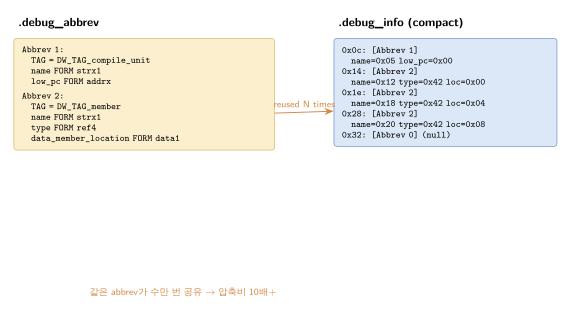
.debug_abbrev:
Abbrev 1:
- DW_TAG_compile_unit (children: yes)
- DW_AT_producer DW_FORM_strx1
- DW_AT_language DW_FORM_data1
- DW_AT_name DW_FORM_strx1
- DW_AT_comp_dir DW_FORM_strx1
- DW_AT_low_pc DW_FORM_addrx
- DW_AT_high_pc DW_FORM_data4
- DW_AT_stmt_list DW_FORM_sec_offset
Abbrev 2:
- DW_TAG_base_type (children: no)
- DW_AT_name DW_FORM_strx1
- DW_AT_encoding DW_FORM_data1
- DW_AT_byte_size DW_FORM_data1
Abbrev 3:
- DW_TAG_class_type (children: yes)
- DW_AT_calling_convention DW_FORM_data1
- DW_AT_name DW_FORM_strx1
- DW_AT_byte_size DW_FORM_data1
Abbrev 4:
- DW_TAG_member (children: no)
- DW_AT_name DW_FORM_strx1
- DW_AT_type DW_FORM_ref4
- DW_AT_data_member_location DW_FORM_data1
.debug_info 안의 각 DIE는 약어 번호 + 속성 값들의 raw 인코딩만 가짐.
.debug_info:
- 0x0c: [Abbrev 1] producer=0x123 language=0x04 name=0x45 comp_dir=0x10 …
- 0x2a: [Abbrev 2] name=0x67 encoding=0x05 byte_size=0x04
- 0x31: [Abbrev 3] calling_conv=0x01 name=0x89 byte_size=0x10
- 0x37: [Abbrev 4] name=0xAB type=0x2a data_member_location=0x00
- 0x40: [Abbrev 4] name=0xCD type=0x2a data_member_location=0x04
- 0x49: [Abbrev 0] ← null = 자식 끝
같은 약어를 수천 번 재사용 → 압축비 매우 큼.
같은 abbrev에 매핑된 DIE의 속성 순서가 정해져 있어 추가 메타데이터(어떤 속성이 어떤 위치) 없이도 디코딩 가능.
#0번 약어
각 CU의 abbrev 표 끝, 그리고 DIE의 자식 끝을 표시. 약어 0 = “더 이상 없음”.
#TAG 카탈로그
거의 40여 개. 자주 보이는 것 모음.
#구조
| TAG | 의미 |
|---|---|
DW_TAG_compile_unit | 컴파일 유닛 (소스 파일 하나) |
DW_TAG_partial_unit | partial CU (header file) |
DW_TAG_module | Ada/Fortran 모듈 |
DW_TAG_namespace | C++ namespace |
DW_TAG_imported_declaration | using |
DW_TAG_imported_module | using namespace |
#함수·블록
| TAG | 의미 |
|---|---|
DW_TAG_subprogram | 함수 |
DW_TAG_inlined_subroutine | 인라인된 호출 |
DW_TAG_lexical_block | { ... } 블록 |
DW_TAG_label | goto 라벨 |
DW_TAG_subroutine_type | 함수 포인터 타입 |
DW_TAG_call_site (DWARF 5) | 호출 지점 메타 |
DW_TAG_call_site_parameter (DWARF 5) | 호출 인자 메타 |
#변수·인자
| TAG | 의미 |
|---|---|
DW_TAG_variable | 지역/전역 변수 |
DW_TAG_formal_parameter | 함수 인자 |
DW_TAG_unspecified_parameters | ... 가변 인자 |
DW_TAG_constant | 컴파일타임 상수 |
#타입
| TAG | 의미 |
|---|---|
DW_TAG_base_type | int, float, char 등 |
DW_TAG_pointer_type | T* |
DW_TAG_reference_type | T& |
DW_TAG_rvalue_reference_type | T&& (C++11) |
DW_TAG_array_type | T[N] |
DW_TAG_structure_type | struct |
DW_TAG_class_type | class |
DW_TAG_union_type | union |
DW_TAG_enumeration_type | enum |
DW_TAG_enumerator | 열거자 (값) |
DW_TAG_typedef | typedef |
DW_TAG_const_type | const T |
DW_TAG_volatile_type | volatile T |
DW_TAG_restrict_type | restrict T |
DW_TAG_atomic_type | _Atomic T |
DW_TAG_member | struct/class 멤버 |
DW_TAG_inheritance | C++ 상속 |
DW_TAG_template_type_parameter | <T> |
DW_TAG_template_value_parameter | <int N> |
DW_TAG_subrange_type | 배열 차원 (Fortran 등) |
DW_TAG_set_type | Pascal set |
C++ 특수.
| TAG | 의미 |
|---|---|
DW_TAG_friend | friend 선언 |
DW_TAG_ptr_to_member_type | int Class::* |
DW_TAG_GNU_template_parameter_pack | variadic template |
#AT (Attribute) 카탈로그
100여 개. 자주 보이는 것.
#이름·식별
| AT | 의미 |
|---|---|
DW_AT_name | 이름 (문자열) |
DW_AT_linkage_name | C++ mangled name |
DW_AT_external | 외부 가시 (extern) |
#위치·범위
| AT | 의미 |
|---|---|
DW_AT_low_pc | 함수/블록 시작 주소 |
DW_AT_high_pc | 끝 주소 (DWARF 4+: 길이) |
DW_AT_ranges | 여러 범위 (.debug_ranges/rnglists 참조) |
DW_AT_entry_pc | 진입점 (low_pc와 다를 수 있음) |
DW_AT_location | 변수의 위치 표현 (Ch 4) |
DW_AT_data_member_location | struct 멤버의 offset |
DW_AT_const_value | 상수 값 |
#타입
| AT | 의미 |
|---|---|
DW_AT_type | 이 DIE의 타입 (다른 DIE 참조) |
DW_AT_byte_size | 바이트 크기 |
DW_AT_bit_size | 비트 필드 크기 |
DW_AT_bit_offset | 비트 필드 offset |
DW_AT_encoding | base type 인코딩 (signed, float, …) |
#소스 위치
| AT | 의미 |
|---|---|
DW_AT_decl_file | 소스 파일 (line table 인덱스) |
DW_AT_decl_line | 줄 번호 |
DW_AT_decl_column | 컬럼 |
DW_AT_call_file | 인라인 호출 파일 |
DW_AT_call_line | 인라인 호출 줄 |
DW_AT_stmt_list | .debug_line offset |
#함수 특수
| AT | 의미 |
|---|---|
DW_AT_prototyped | 프로토타입 있음 |
DW_AT_frame_base | frame base 표현 (보통 CFA) |
DW_AT_return_addr | return address 위치 |
DW_AT_calling_convention | 호출 규약 |
DW_AT_noreturn (DWARF 5) | abort 같은 함수 |
DW_AT_inline | 인라인 종류 |
#C++ 특수
| AT | 의미 |
|---|---|
DW_AT_virtuality | virtual 함수 |
DW_AT_vtable_elem_location | vtable 위치 |
DW_AT_accessibility | private/protected/public |
DW_AT_explicit | explicit ctor |
DW_AT_object_pointer | this 포인터 |
#메타
| AT | 의미 |
|---|---|
DW_AT_producer | 컴파일러 (예: “clang 17.0.0”) |
DW_AT_language | DW_LANG_C_plus_plus 등 |
DW_AT_comp_dir | 컴파일 디렉터리 |
DW_AT_GNU_macros | 매크로 정보 |
#FORM — 속성 값의 인코딩 형식
각 AT의 값이 어떻게 인코딩되는지를 FORM이 결정.
#데이터
| FORM | 인코딩 |
|---|---|
DW_FORM_data1 | 1바이트 |
DW_FORM_data2 | 2바이트 |
DW_FORM_data4 | 4바이트 |
DW_FORM_data8 | 8바이트 |
DW_FORM_data16 | 16바이트 |
DW_FORM_sdata | LEB128 signed |
DW_FORM_udata | LEB128 unsigned |
DW_FORM_implicit_const | abbrev에 박힘 (DWARF 5) |
#문자열
| FORM | 인코딩 |
|---|---|
DW_FORM_string | 인라인 NUL-terminated |
DW_FORM_strp | .debug_str offset (4바이트) |
DW_FORM_line_strp | .debug_line_str offset (DWARF 5) |
DW_FORM_strx1..4 | .debug_str_offsets 인덱스 (DWARF 5) |
#주소
| FORM | 인코딩 |
|---|---|
DW_FORM_addr | 절대 주소 (address_size) |
DW_FORM_addrx | .debug_addr 인덱스 (DWARF 5, split-DWARF용) |
DW_FORM_sec_offset | 다른 섹션 offset |
#DIE 참조
| FORM | 인코딩 |
|---|---|
DW_FORM_ref1..8 | 같은 CU 안의 DIE offset |
DW_FORM_ref_addr | 다른 CU의 DIE offset |
DW_FORM_ref_sig8 | 8바이트 type signature (.debug_types) |
DW_FORM_ref_sup4/ref_sup8 | supplementary obj 참조 (DWARF 5) |
#표현식
| FORM | 인코딩 |
|---|---|
DW_FORM_exprloc | DWARF expression (block) |
DW_FORM_block/block1/block2/block4 | 원시 byte block |
DW_FORM_loclistx | .debug_loclists 인덱스 (DWARF 5) |
DW_FORM_rnglistx | .debug_rnglists 인덱스 (DWARF 5) |
#Flag
| FORM | 인코딩 |
|---|---|
DW_FORM_flag | 1바이트 0/1 |
DW_FORM_flag_present | abbrev에 있으면 always 1 |
#LEB128 — 가변 길이 정수
DWARF는 작은 정수를 짧게 표현하려고 LEB128(Little Endian Base 128)을 광범위 사용.
인코딩은 값을 7비트 청크로 나눠 little-endian 순서로 늘어놓는 방식입니다. 각 바이트의 MSB가 continue 비트 역할을 합니다.
- 마지막 청크는 MSB=0.
- 나머지 청크는 MSB=1 (continue).
624485(0b100110000111011100101)를 인코딩하면 이렇게 됩니다.
| 단계 | 값 |
|---|---|
| 7-bit 청크 (LE) | 0100101, 0001110, 0100110 |
| MSB를 붙인 바이트 | 11100101, 10001110, 00100110 |
| 16진수 | 0xE5, 0x8E, 0x26 |
작은 값(0-127)은 1바이트, 큰 값은 가변.
// LEB128 디코딩 (unsigned)uint64_t decode_uleb128(const uint8_t **p) { uint64_t result = 0; int shift = 0; while (1) { uint8_t b = *(*p)++; result |= ((uint64_t)(b & 0x7F)) << shift; if ((b & 0x80) == 0) break; shift += 7; } return result;}DW_FORM_udata, DW_FORM_sdata, .debug_line 명령 인자 등 거의 모든 곳에서 등장. 작은 정수가 흔한 디버그 정보에 최적.
#문자열 풀 — .debug_str
DIE의 DW_FORM_strp 값은 .debug_str 안의 NUL-terminated 문자열로의 offset.
.debug_str:
- 0x0000: “main.cpp\0”
- 0x0009: “int\0”
- 0x000d: “MyClass\0”
- 0x0015: “x\0”
- 0x0017: “y\0”
- 0x0019: “obj\0”
- …
같은 문자열이 여러 DIE에서 공유 → 중복 제거. 큰 프로젝트에서 클래스명·함수명이 수백 번 반복되므로 효과 큼.
DWARF 5의 .debug_str_offsets + DW_FORM_strx*는 한 단계 더 — DIE 안에 인덱스만 두고, 인덱스 → .debug_str_offsets → .debug_str 두 단계 lookup. split-DWARF에서 .dwo 안의 짧은 인덱스로 ELF 측 큰 문자열 풀을 참조.
#ELF 형식 vs CIE 형식
DWARF 데이터의 endianness·word-size가 ELF에 종속.
- ELF가 little-endian → DWARF도 LE.
- ELF가 64-bit → 주소 8바이트.
다만 unit_length가 0xFFFFFFFF면 DWARF64 모드 — 길이가 8바이트. 일반적인 DWARF는 DWARF32(섹션 offset이 4바이트). DWARF64는 매우 큰 디버그 정보(4 GB 초과)에서.
#자동 도구 — pyelftools
from elftools.elf.elffile import ELFFile
with open('my_prog', 'rb') as f: elf = ELFFile(f) if not elf.has_dwarf_info(): print("no dwarf info"); exit()
dwarf = elf.get_dwarf_info() for cu in dwarf.iter_CUs(): top = cu.get_top_DIE() print(f"CU: {top.attributes['DW_AT_name'].value.decode()}") for die in top.iter_children(): if die.tag == 'DW_TAG_subprogram': name = die.attributes.get('DW_AT_name') low = die.attributes.get('DW_AT_low_pc') if name and low: print(f" fn {name.value.decode()} @ {low.value:#x}")자체 분석 도구 (코드 사이즈 분석, 미사용 함수 검출, 심볼 그래프 등)를 만드는 출발점. Ch 6에서 더 자세히.
#컴파일러 차이
같은 코드라도 GCC와 Clang의 DWARF 출력이 조금씩 다릅니다.
| GCC | Clang | |
|---|---|---|
| 기본 DWARF 버전 | 5 (GCC 11+) | 5 (Clang 11+) |
.debug_aranges | 출력 | -gdwarf-aranges 필요 |
| 인라인 trace 깊이 | 더 깊음 | 보수적 |
DW_OP_entry_value | GCC 8+ | Clang 11+ |
| LTO 보존 | 보통 | -flto=thin 권장 |
| Split-DWARF | -gsplit-dwarf | -gsplit-dwarf |
호환을 위해 -gdwarf-4로 다운그레이드 가능 — 오래된 GDB (<= 9) 환경.
#DWARF version 협상
ELF 안에는 여러 컴파일 유닛이 있고 각각이 다른 DWARF version일 수 있습니다 (외부 라이브러리가 다른 컴파일러로 빌드됐을 때). GDB는 각 CU를 그 version으로 파싱.
$ llvm-dwarfdump my_prog | grep "version ="여러 version이 섞여 있으면 DWARF parser가 복잡해집니다 — 도구 호환성 문제의 원인이 되기도.
#정리
- DWARF는 DIE 트리 + abbreviation + 문자열 풀의 조합.
- 한 컴파일 유닛 = 한 소스 파일.
- 약어가 같은 형태의 DIE를 수만 번 공유 → 압축비 매우 큼.
- TAG 40여 개로 모든 언어 구조 표현.
- AT 100여 개로 각 속성.
- FORM이 속성 값의 인코딩 (data, string, address, reference, expression).
- LEB128이 가변 길이 정수 인코딩.
.debug_str가 문자열 풀. DWARF 5는.debug_str_offsets한 단계 더.- DWARF 5는 split-DWARF·
.debug_names·DW_OP_entry_value등 추가. - llvm-dwarfdump / pyelftools가 검사·자체 도구의 표준.
#다음 장 예고
Ch 3 — .debug_line 바이트코드 VM. 어떻게 수천 줄의 PC↔소스 매핑이 수십 바이트로 압축되는지.
#관련 항목
- Ch 1: ELF 포맷
- Ch 3: .debug_line 바이트코드 VM
- GDB and LLDB Ch 12: DWARF 디버그 정보 — 같은 포맷을 디버거가 쓰는 쪽에서. 이 시리즈는 포맷 자체를 분해합니다
- DWARF 5 표준 PDF
- llvm-dwarfdump
- pyelftools 문서
- Eli Bendersky — How debuggers work series — DWARF 입문
DWARF and ELF Internals · 2 of 6
- 1 ELF 포맷 분해 — Section·Segment·Symbol Table 구조 추적
- 2 DWARF 디버그 정보 분해 — DIE 트리와 .debug_abbrev
- 3 DWARF .debug_line 분석 — Source-to-PC 매핑 바이트코드 VM
- 4 DWARF .debug_loc 분석 — Variable Location Expression VM
- 5 DWARF Call Frame Information — .debug_frame과 .eh_frame 분해
- 6 DWARF 도구 생태계 — split-DWARF·dwz·debuginfod·pyelftools
관련 글
DWARF .debug_line 분석 — Source-to-PC 매핑 바이트코드 VM
DWARF 줄 정보의 정체. 상태 머신, 표준/확장 opcode, file table, addr2line의 내부.
같은 시리즈에서 이어 읽기
DWARF .debug_loc 분석 — Variable Location Expression VM
변수가 어디 있는지의 표현. 스택 머신 opcode, location list, DW_OP_entry_value.
같은 시리즈에서 이어 읽기
DWARF 디버그 정보 — 디버거가 변수와 라인을 찾는 방식
DWARF 표준, DIE / abbrev / line / location, expression VM, CFI, split-DWARF.
공통 태그 기반 추천