메모리 대역폭 분석 — STREAM·Roofline·Bus Saturation 측정
#한 줄 요약
입니다. 대역폭이 saturation 상태에 이르면 CPU가 빠르지 않은 것이 아니라 메모리가 발목을 잡습니다.
#STREAM Benchmark — 표준
John McCalpin이 1995년에 만든 STREAM이 표준입니다.
| Kernel | 동작 | bytes per element |
|---|---|---|
| Copy | c[i] = a[i] | 16 (8 read + 8 write) |
| Scale | c[i] = k * a[i] | 16 |
| Add | c[i] = a[i] + b[i] | 24 |
| Triad | c[i] = a[i] + k * b[i] | 24 |
#define N 8000000double a[N], b[N], c[N];
for (i = 0; i < N; i++) c[i] = a[i] + 3.0 * b[i]; // Triad총 데이터는 24 × N = 192 MB입니다. Working set이 L3보다 크기 때문에 사실상 DRAM 대역폭을 측정합니다.
실측 예 — Raspberry Pi 4 (LPDDR4-3200, 32-bit bus):
- Copy: 4.2 GB/s
- Scale: 3.8 GB/s
- Add: 3.5 GB/s
- Triad: 3.4 GB/s
이론치는 3200 × 4 byte / 8 = 1600 MB/s × 2 = 12.8 GB/s인데, 실측은 그중 25-30%만 활용합니다.
#왜 이론치의 30%?
- Refresh: DRAM은 매 64ms마다 행 refresh를 수행하며, 약 3%를 손실합니다.
- Row activation: 다른 row에 접근할 때 15-30 cycle의 overhead가 붙습니다.
- Bus turnaround: read와 write를 전환할 때 5-10 cycle이 소모됩니다.
- Refresh 우선: refresh가 진행되는 동안 CPU는 대기합니다.
이 주제는 Hennessy & Patterson의 Bandwidth Limited or Latency Limited? 논문이 잘 정리해 두었습니다.
#Roofline Model
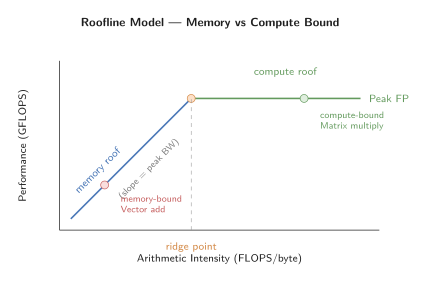
- 알고리즘의 arithmetic intensity (FLOPS / memory byte)를 계산합니다.
- intensity가 ridge point보다 낮으면 memory-bound, 높으면 compute-bound입니다.
// Vector add: 1 FLOP per 2 read + 1 write = 1/24 byte → memory bound// Matrix multiply: 2 N^3 FLOP / 3 N^2 byte = O(N) intensity → compute bound (큰 N)#ARM CCN — Coherent Mesh Network
Cortex-A57 이상 SoC는 4-cluster mesh 구조를 사용합니다.
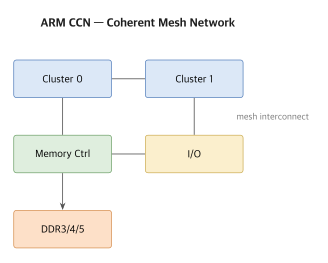
L3 bandwidth는 DRAM bandwidth보다 훨씬 큽니다. 그래서 L3 hit율이 핵심입니다.
#DRAM 측정 — perf event
# Cortex-A53perf stat -e r19 ./prog # BUS_ACCESS (bus 총 access 수)perf stat -e r1a ./prog # MEMORY_ERRORperf stat -e r1d ./prog # BUS_CYCLES
# 환산bandwidth = BUS_ACCESS × line_size / elapsed_timeIntel 플랫폼에서는 pcm-memory로 측정하고, dmidecode -t memory로 사양을 확인할 수 있습니다.
#STM32H7 — Memory Hierarchy
Cortex-M7 STM32H743의 메모리 계층은 다음과 같습니다.
| 메모리 | 크기 | 속도 |
|---|---|---|
| ITCM | 64 KB | 0 wait state @ 480 MHz |
| DTCM | 128 KB | 0 ws |
| AXI SRAM | 512 KB | 1 ws |
| AHB SRAM | 288 KB | 2 ws |
| Flash | 2 MB | 7 ws @ 480 MHz (cache로 hide) |
| External SDRAM (FMC) | optional | ~10x slow |
__attribute__((section(".dtcm"))) float dtcm_buf[256]; // fastestExternal SDRAM은 bandwidth가 발목을 잡습니다. 큰 LCD framebuffer를 쓰면 그 자리에서 frame rate가 결정됩니다.
#Cortex-A72 + LPDDR4 — 모바일
Snapdragon 845는 4-channel LPDDR4-1866으로 이론 대역폭이 약 30 GB/s입니다. 실측 STREAM은 약 17 GB/s 수준입니다.
4K@60fps decode: 1.5 GB/sDisplay refresh: 2 GB/sGPU: 5-10 GB/sCPU: 2-3 GB/s 총 ~15 GB/s → 거의 saturation게임이 thermal throttle을 일으키는 한 가지 이유가 바로 이것입니다.
#자동차·항공 LV — DDR3·SDRAM·SRAM
| 시스템 | 메모리 |
|---|---|
| 자동차 ECU (저급) | 내장 flash + SRAM, 512 KB |
| 자동차 ECU (Cortex-A 인포테인먼트) | LPDDR3/4, 2-8 GB |
| 누리·항공기 FCC | rad-hard SRAM, 1-4 MB |
| 위성 OBC | rad-hard SDRAM, 16-128 MB |
Rad-hard memory는 일반 메모리에 비해 약 10배 비싸고 5배 느립니다. Bandwidth 사양은 200-400 MB/s 수준입니다.
#NUMA — Multi-Socket
Linux 서버에서는 다음과 같이 NUMA 토폴로지를 확인합니다.
numactl --hardware# node 0: CPUs 0-7, 64GB# node 1: CPUs 8-15, 64GB# inter-node bandwidth ~70% of localnumactl --cpunodebind=0 --membind=0 ./prog같은 node에 CPU와 memory를 바인딩하면 bandwidth가 최적이 됩니다.
임베디드에서는 NUMA가 드물지만, AMP 시스템에서 비슷한 구조를 만나게 됩니다. CPU마다 별도의 SRAM 영역을 분리해 두는 식입니다.
#DMA로 CPU offload
CPU가 직접 memcpy를 수행하면 bandwidth와 CPU cycle을 동시에 소모합니다.
HAL_DMA_Start(&hdma, src, dst, len); // CPU 자유특히 Cortex-M에서는 large buffer를 copy할 때 DMA를 우선 고려합니다.
다만 small copy는 DMA 셋업 overhead가 오히려 더 큽니다. 경계점은 대략 256 byte 정도입니다.
#Streaming Store — Cache 우회
for (i = 0; i < N; i++) { dst[i] = compute(i); __builtin_nontemporal_store(value, &dst[i]); // or}큰 stream write를 할 때 cache evict pressure를 피하는 용도입니다.
ARM에서는 STNP, x86에서는 MOVNTPS가 같은 역할을 합니다.
#자주 하는 실수
⚠️ “RAM이 크면 빠름” 오해
용량과 bandwidth는 다릅니다. DDR4-2666 32GB가 DDR4-3200 16GB보다 오히려 느립니다. 결국 속도가 결정합니다.
⚠️ Single-channel 사용
Dual-channel: 2x bandwidthQuad-channel: 4x (서버급)PC를 자작할 때는 RAM을 2 slot에 같은 모듈로 꽂아야 합니다. 모르고 single channel로 사용하는 경우가 흔합니다.
⚠️ memcpy를 모두 같다고 가정
memcpy(d, s, 32); // ~5 cycle — inlinememcpy(d, s, 16384); // SIMD + non-temporal — DMA보다 빠름 가능memcpy(d, s, 16M); // ← DMA 또는 hardware copy engine 고려libc memcpy는 size별로 자동 최적화됩니다. 그렇다고 DMA가 항상 더 좋은 것은 아닙니다.
⚠️ Bandwidth 측정 시 cache warm-up 안 함
warmup_array(arr); // 한 번 순회start = now();benchmark(); // 진짜 측정Cold cache 측정에는 compulsory miss가 포함되어 결과가 부정확해집니다.
#정리
- STREAM은 bandwidth 표준 벤치마크입니다 (Copy/Scale/Add/Triad).
- 실측은 이론치의 25-50% 수준입니다.
- Roofline model로 memory bound와 compute bound를 판별합니다.
- PMU BUS_ACCESS 카운터로 측정합니다.
- 자동차·항공용 rad-hard SRAM은 일반 메모리보다 약 10배 비쌉니다.
- DMA와 non-temporal store로 cache pollution을 회피합니다.
다음 편에서는 SIMD/NEON을 다룹니다.
#관련 항목
Embedded Performance Engineering · 17 of 57
- 1 Embedded Performance Engineering — 임베디드 성능 엔지니어링 시리즈 소개
- 2 임베디드 성능 분석 방법론 — Measure → Analyze → Optimize 사이클
- 3 성능 지표 정의 — Latency·Throughput·Utilization 분석
- 4 성능 측정의 기본 — Wall-Clock·CPU Cycle·Instruction Count
- 5 성능 데이터 통계적 분석 — Percentile·Histogram·평균의 함정
- 6 실시간 성능 분석 — WCET·Jitter·Deadline Miss 측정
- 7 임베디드 벤치마킹 기초 — 재현성·Warmup·노이즈 제거
- 8 성능 모델링 — Amdahl·Gustafson·Roofline Model 적용
- 9 프로파일링 기법 개요 — Sampling vs Instrumentation·PGO·LTO
- 10 CPU 파이프라인 분석 — 5-stage·Cortex-M·Cortex-A 비교
- 11 Pipeline Stall 분석 — Data·Structural·Control Hazard·Forwarding
- 12 Branch Prediction 분석 — Static·2-bit·BTB·BHT·Mispredict 비용
- 13 Speculative Execution 분석 — OoO·Reorder Buffer·Register Renaming
- 14 CPU Cache 기초 — L1·L2·L3·Set Associative·Replacement Policy
- 15 Cache Miss 3C Model 분석 — Compulsory·Capacity·Conflict
- 16 Cache Line 최적화 — Alignment·Prefetch·False Sharing 처리
- 17 메모리 대역폭 분석 — STREAM·Roofline·Bus Saturation 측정
- 18 SIMD·NEON 활용 — 128-bit Vector·Auto-Vectorization·SVE/SVE2
- 19 PMU·HPM 하드웨어 카운터 분석 — 정밀 성능 진단
- 20 임베디드 Bus Architecture — AHB·AXI·CHI 진화와 5-Channel
- 21 Bus Contention 진단 — Arbitration·QoS·Starvation 측정
- 22 DMA 성능 최적화 — Burst·Scatter-Gather·Chain·Cache 일관성
- 23 DMA vs CPU Copy 성능 비교 — Break-even·Setup Overhead 실측
- 24 Interrupt Latency 분석 — 진입·종료·Tail-Chaining·Late Arrival
- 25 Interrupt Storm 처리 — NAPI·Rate-Limit·Polling 전환
- 26 MMIO 접근 성능 — Cache Policy·Write-Combining·Volatile·Barrier
- 27 Peripheral Clock 분석 — PLL·Divider·Gating·DVFS
- 28 Power vs Performance 트레이드오프 — DVFS·Race-to-Idle·Big.LITTLE
- 29 Thermal Throttling 분석 — Junction Temp·Trip Point·냉각
- 30 CXL Interconnect 분석 — AI 시대 메모리 대역폭 확장
- 31 Concurrency 기초 — Concurrency vs Parallelism·Race·Memory Model
- 32 False Sharing 진단 — Cache Line Ping-Pong·Padding·측정
- 33 Lock Contention 분석 — Wait·Hold·Convoy·측정 기법
- 34 Spinlock 성능 분석 — Spin-Wait vs Context Switch·Ticket·MCS
- 35 Mutex 성능 분석 — Futex·Adaptive·Priority Inheritance
- 36 Reader-Writer Lock 성능 — Reader/Writer Priority·RCU·Seqlock
- 37 Lock-Free 자료구조 성능 — CAS·ABA·Hazard Pointer·Epoch Reclamation
- 38 Memory Ordering 분석 — Acquire·Release·Seq-Cst·ARM Relaxed Model
- 39 Cache Coherency 프로토콜 — MESI·MOESI·Snoop·Directory
- 40 SMP 성능 분석 — Per-Core·Affinity·Load Balance·Scalability
- 41 Linux perf 기초 — stat·record·report 활용
- 42 Linux perf 고급 — Raw Event·Tracepoint·perf script
- 43 ftrace 활용 — function·function_graph·latency tracer
- 44 eBPF·bpftrace 동적 트레이싱 — 커널 무수정 관측
- 45 Flamegraph 분석 — On-CPU·Off-CPU·Differential
- 46 ARM DS·Lauterbach 분석 — Hardware Trace 전문 도구
- 47 Bare-metal 프로파일링 — GPIO·DWT·SysTick·ITM 활용
- 48 NVIDIA Nsight Systems — GPU·NPU 포함 시스템 분석
- 49 모던 프로파일러 비교 — Tracy·Hotspot·uftrace·Coz
- 50 연속 프로파일링 — Parca·Pixie·Pyroscope·Tetragon
- 51 실전 사례 — ISR Latency 100µs Deadline Miss 추적
- 52 실전 사례 — Matrix Multiply가 예상의 10배 느린 이유
- 53 실전 사례 — 8-core가 4-core를 넘으면 throughput이 떨어지는 이유
- 54 실전 사례 — 카메라 1080p 60fps가 30fps로 떨어지는 이유
- 55 CXL.mem 지연·대역폭 실측 — Direct·Switch·Pooled 토폴로지 비교
- 56 CXL 성능 프로파일링 도구 — cxl-cli·DAMON·perf-mem 활용
- 57 실전 사례 — CXL.mem 추가로 LLM inference KV cache 처리량 회복
관련 글
SIMD·NEON 활용 — 128-bit Vector·Auto-Vectorization·SVE/SVE2
ARM NEON 128-bit, SVE 가변폭. Auto-vectorize (-O3). Intrinsics. Cortex-M Helium (MVE).
같은 시리즈에서 이어 읽기
PMU·HPM 하드웨어 카운터 분석 — 정밀 성능 진단
ARMv8 PMU 6+ counter, RISC-V HPM. CYCLE·INST_RETIRED·CACHE·BRANCH. perf 활용.
같은 시리즈에서 이어 읽기
메모리 대역폭 병목 분석 — Theoretical vs Achievable·Roofline·Memory Wall
Theoretical vs achievable — 메모리 대역폭의 실제와 roofline·memory wall.
공통 태그 기반 추천
이 글을 참조하는 글 (7)
- 실전 사례 — CXL.mem 추가로 LLM inference KV cache 처리량 회복 — Embedded Performance Engineering
- CXL.mem 지연·대역폭 실측 — Direct·Switch·Pooled 토폴로지 비교 — Embedded Performance Engineering
- CXL Interconnect 분석 — AI 시대 메모리 대역폭 확장 — Embedded Performance Engineering
- SIMD·NEON 활용 — 128-bit Vector·Auto-Vectorization·SVE/SVE2 — Embedded Performance Engineering
- Cache Line 최적화 — Alignment·Prefetch·False Sharing 처리 — Embedded Performance Engineering
- Cache Miss 3C Model 분석 — Compulsory·Capacity·Conflict — Embedded Performance Engineering
- 성능 모델링 — Amdahl·Gustafson·Roofline Model 적용 — Embedded Performance Engineering