folly::collect·collectAll·collectAny — fan-in 패턴 분석
한 줄 요약:
collect는 모두 성공을,collectAll은 모두 완료(예외 포함)를,collectAny는 하나만 완료를 기다린다. 셋의 의미가 fan-in 패턴의 의도를 코드에 적는다.
#동기 — fan-in 패턴
비동기 시스템에서 자주 등장하는 구조는 여러 작업의 결과를 모으는 것이다.
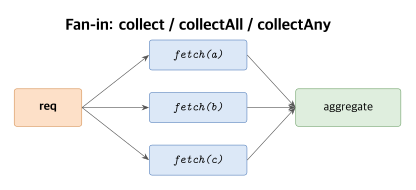
이를 일반화하면 세 가지 패턴이 보인다.
- all-or-nothing — 하나라도 실패하면 전체 실패 (예: parallel RPC가 모두 성공해야 응답)
- gather-all — 성공/실패를 모두 받아 부분 결과 활용 (예: 일부 서비스가 죽어도 응답)
- first-wins — 가장 먼저 완료된 하나만 사용 (예: redundant query, timeout race)
Folly는 이 셋을 collect/collectAll/collectAny로 명시한다.
#API 요약
#include <folly/futures/Future.h>
// (1) collect — 하나라도 실패하면 전체 실패folly::SemiFuture<std::tuple<int, std::string>> sf1 = folly::collect(makeSemiFuture(1), makeSemiFuture<std::string>("ok"));
folly::SemiFuture<std::vector<int>> sf2 = folly::collect(vector_of_semifutures);
// (2) collectAll — 모두 완료 (Try로 감쌈)folly::SemiFuture<std::tuple<Try<int>, Try<std::string>>> sf3 = folly::collectAll(makeSemiFuture(1), makeSemiFuture<std::string>("ok"));
folly::SemiFuture<std::vector<Try<int>>> sf4 = folly::collectAll(vector_of_semifutures);
// (3) collectAny — 가장 먼저 완료 (pair: index + Try)folly::SemiFuture<std::pair<size_t, Try<int>>> sf5 = folly::collectAny(vector_of_semifutures);
// (4) collectN — n개 완료folly::SemiFuture<std::vector<std::pair<size_t, Try<int>>>> sf6 = folly::collectN(vector_of_semifutures, 3);#collect — 모두 성공해야 함
auto futures = std::vector{ fetchUser(1), // SemiFuture<User> fetchUser(2), fetchUser(3),};
folly::collect(std::move(futures)) .via(&pool) .thenValue([](std::vector<User> users) { return aggregate(users); }) .thenError(folly::tag_t<std::exception>{}, [](auto& e) { LOG(ERROR) << "at least one fetch failed: " << e.what(); return Aggregate{}; });하나라도 실패하면 첫 실패의 예외가 결과 SemiFuture로 전파된다. 나머지 작업은 계속 돌지만 결과는 버려진다.
// folly/futures/Future-inl.h (개념)template <class It>SemiFuture<std::vector<value_t>> collect(It first, It last) { size_t n = std::distance(first, last); auto ctx = std::make_shared<CollectContext>(n); for (size_t i = 0; first != last; ++first, ++i) { std::move(*first).setCallback_([ctx, i](Try<T>&& t) { if (t.hasException()) { ctx->setPartialResult(t.exception()); } else { ctx->setPartialResult(i, *std::move(t)); } }); } return ctx->promise.getSemiFuture();}CollectContext가 남은 갯수를 atomic 카운터로 추적하고, 0이 되면 Promise를 set한다.
#collectAll — 부분 실패 허용
folly::collectAll(std::move(futures)) .via(&pool) .thenValue([](std::vector<Try<User>> results) { std::vector<User> ok; size_t failed = 0; for (auto& r : results) { if (r.hasValue()) ok.push_back(*std::move(r)); else ++failed; } LOG(INFO) << "ok=" << ok.size() << " failed=" << failed; return aggregate(ok); });각 결과가 Try<T>로 감싸져 예외도 값으로 다룬다. 부분 결과를 활용해야 할 때 적합하다.
#collectAny — race / first-wins
auto futures = std::vector{ queryReplicaA(), queryReplicaB(), queryReplicaC(),};
folly::collectAny(std::move(futures)) .via(&pool) .thenValue([](auto pair) { auto [idx, result] = std::move(pair); LOG(INFO) << "first replica: " << idx; if (result.hasException()) { // 가장 빠른 응답이 실패 — 다음 단계는 collectAnyWithoutException 고려 } return *std::move(result); });가장 빠른 완료이지 가장 빠른 성공이 아니다. 가장 빠른 실패도 잡힌다. 성공만 원한다면 collectAnyWithoutException을 쓴다.
#collectAnyWithoutException — 모두 실패해야 실패
folly::collectAnyWithoutException(std::move(futures)) .via(&pool) .thenValue([](auto pair) { auto [idx, value] = std::move(pair); // 성공값 return value; }) .thenError([](folly::exception_wrapper&&) { return Default{}; // 모두 실패 — 마지막 예외 });예외 없이 완료된 첫 Future를 돌려준다. 하나도 성공하지 못하면 마지막 예외가 결과로 전달된다 (collectAny처럼 모든 예외를 모으지는 않는다).
#variadic vs range
collect 계열은 두 오버로드를 제공한다.
// variadic — 타입이 다른 Futureauto sf = folly::collect( fetchUser(1), // SemiFuture<User> fetchOrders(1), // SemiFuture<vector<Order>> fetchAddress(1)); // SemiFuture<Address>// sf: SemiFuture<tuple<User, vector<Order>, Address>>
// range — 같은 타입의 Futurestd::vector<SemiFuture<User>> v = ...;auto sf = folly::collect(std::move(v));// sf: SemiFuture<vector<User>>variadic은 서로 다른 type의 결과를 한 번에 모을 때 편리하다.
#collectN — n개 완료 기다림
auto sf = folly::collectN(std::move(futures), 3);// sf: SemiFuture<vector<pair<size_t, Try<T>>>>
// 가장 빠른 3개를 받는다quorum read 같은 패턴에 유용하다. 5개 replica 중 3개 응답을 받으면 진행한다.
#비교 표
| API | 완료 시점 | 결과 타입 | 예외 처리 |
|---|---|---|---|
collect | 모두 성공 OR 첫 실패 | vector<T> 또는 tuple | 첫 예외 전파 |
collectAll | 모두 완료 | vector<Try<T>> 또는 tuple | 모두 Try로 |
collectAny | 첫 완료 | pair<size_t, Try<T>> | Try로 |
collectAnySuccessful | 첫 성공 OR 모두 실패 | pair<size_t, T> | 모두 실패 시 예외 |
collectN | n개 완료 | vector<pair<size_t, Try<T>>> | Try로 |
#std와 비교
C++ 표준에는 fan-in primitive가 없다. std::async로 여러 작업을 띄우고 *각각 .get()*해야 한다.
// std로 동등 — sequential getauto f1 = std::async(...);auto f2 = std::async(...);auto f3 = std::async(...);auto r1 = f1.get(); // f2/f3는 끝나도 못 받음auto r2 = f2.get();auto r3 = f3.get();// 첫 .get()이 blocking, 그 동안 다른 결과는 idlefolly::collect는 동시 wait을 한 번에 한다. context switch가 줄고, 가장 늦은 완료까지의 time만 든다.
#코드 리뷰 포인트
collect인지collectAll인지 의도가 맞는가? 부분 실패 허용 여부가 결정한다.- 결과의 vector size가 input과 같은가? 그렇다. index 순서 유지된다.
collectAny의 결과가 실패면 다음 step이 처리하는가? 자주 빠뜨리는 부분.- 여러 작업이 서로 다른 executor에서 도는가? OK다.
collect는 executor를 묶지 않는다.
#자주 보는 안티패턴
// 1. collect로 부분 실패 무시folly::collect(futures).get();// 하나만 실패해도 전체 throw — 의도가 partial이면 collectAll
// 2. collectAll 후 첫 예외만 체크auto results = folly::collectAll(futures).get();for (auto& r : results) { if (r.hasException()) throw r.exception(); // 첫 예외만 본다}// 의도가 all-or-nothing이면 처음부터 collect 사용
// 3. collectAny가 실패해도 진행folly::collectAny(futures).thenValue([](auto pair) { return process(*pair.second); // pair.second가 예외면 throw});
// 4. 무한히 큰 vector를 collectfolly::collect(million_futures); // memory 부담 — window로 분할#정리
collect/collectAll/collectAny는 fan-in 패턴의 세 의미를 명시한다.collect는 all-or-nothing,collectAll은 부분 실패 허용,collectAny는 first-wins다.- variadic 오버로드는 타입이 다른 Future를 tuple로, range 오버로드는 vector로 반환한다.
- 결과는 input과 같은 index 순서를 유지한다.
collectN은 quorum 패턴에,collectAnySuccessful은 redundant query에 적합하다.- 큰 수의 작업에는
folly::window로 동시성 제한과 결합한다.
#다음 편
Part 2-06: retry / window / via에서 retry 정책, 동시성 제한, executor 전환을 본다.
#관련 항목
Folly Code Review · 11 of 89
- 1 Folly Code Review — Meta의 production-grade C++ 라이브러리 코드 분석
- 2 Folly 개요 — Meta가 production에서 검증한 utility 모음 분석
- 3 Folly vs Abseil 철학 비교 — performance-first vs std-compatible
- 4 Folly 빌드와 fbcode 환경 — monorepo의 그림자
- 5 Folly API stability 정책 — 어떤 보장도 없다는 솔직함
- 6 Folly production validation 문화 — peta-scale에서 단련된 코드
- 7 folly::Future 분석 — std::future의 한계를 넘는 composable async
- 8 folly::Promise·makeFuture — Future를 만드는 두 길
- 9 folly::SemiFuture vs Future — executor binding의 명시화
- 10 folly::Future thenValue·thenError·thenTry — continuation 체인 분석
- 11 folly::collect·collectAll·collectAny — fan-in 패턴 분석
- 12 folly::Future retry·window·via — 제어 흐름 조합자
- 13 folly::fibers 분석 — M:N stackful coroutine
- 14 folly::InlineExecutor — 호출자 thread에서 즉시 실행
- 15 folly::CPUThreadPoolExecutor — CPU-bound 작업의 표준 thread pool
- 16 folly::IOThreadPoolExecutor — libevent 기반 I/O pool
- 17 folly::ManualExecutor — 결정적 테스트를 위한 수동 진행
- 18 folly::EventBase 분석 — libevent 이벤트 루프의 핵심
- 19 folly::IOBuf 분석 — zero-copy buffer chain의 기본 단위
- 20 folly::IOBufQueue — chain의 push/pull 추상화
- 21 folly::io::Cursor·RWCursor — chain 위의 stream
- 22 folly Zero-copy 패턴 — IOBuf로 ScatterGather I/O 표현
- 23 folly::IOBuf shared semantics — clone·unshare·takeOwnership
- 24 folly::FBString 분석 — SSO + COW 구현
- 25 folly의 fmt::format 통합 — 모던 포맷팅 채택
- 26 folly::StringPiece — string_view 호환 분석
- 27 folly Join·Split utilities — 문자열 분해와 결합
- 28 folly::to·tryTo — text↔num 변환 분석
- 29 folly Conv Customization — 사용자 타입 지원
- 30 folly Conv 성능 비교 — sprintf·stringstream 대비
- 31 folly::F14ValueMap vs std::unordered_map
- 32 folly::F14NodeMap — stable pointer가 필요할 때
- 33 folly::F14VectorMap — cache-friendly iteration
- 34 folly::F14FastMap — auto-select 동작
- 35 folly F14 internals — SIMD probing 메커니즘
- 36 folly::small_vector — inline storage 분석
- 37 folly::FixedString — compile-time string
- 38 folly::AtomicHashMap — lock-free read 분석
- 39 folly::ConcurrentHashMap — sharded 동시 해시 맵
- 40 folly::EvictingCacheMap — LRU 구현 분석
- 41 folly::Synchronized — lock wrapper 패턴
- 42 folly::SharedMutex 분석
- 43 folly::Baton — one-shot wait 동기화
- 44 folly::RWSpinLock 분석
- 45 folly::PicoSpinLock — 1-byte spinlock
- 46 folly::ProducerConsumerQueue — SPSC 큐 분석
- 47 folly::MPMCQueue — multi-producer multi-consumer
- 48 folly::UnboundedQueue — 동적 크기 lock-free
- 49 folly::fibers::Channel — Go-like channel
- 50 folly::dynamic — JSON-like dynamic type 분석
- 51 folly JSON conversion — toJson·parseJson
- 52 folly dynamic ↔ struct — manual marshaling
- 53 folly dynamic Visitor pattern — type별 분기
- 54 folly::Singleton vs Meyers/static — 왜 Folly의 Singleton인가
- 55 folly::SingletonVault 분석 — 등록·소멸·의존성
- 56 folly::Singleton try_get·try_get_fast — TLS-cached 접근
- 57 folly::ExceptionWrapper — type-erased exception holder
- 58 folly::ScopeGuard·SCOPE_EXIT — RAII cleanup
- 59 folly::Optional vs std::optional
- 60 folly::Function vs std::function
- 61 folly::Lazy — 지연 초기화 wrapper
- 62 folly Meta 스타일 code review 패턴
- 63 folly anti-patterns — 잘못 쓰면 std보다 느림
- 64 folly vs std 선택 기준 분석
- 65 folly::coro 개요 — production C++20 코루틴 어댑터
- 66 folly::coro::Task — lazy single-shot 코루틴
- 67 folly::coro::AsyncGenerator — 비동기 스트림
- 68 folly coro blockingWait·collectAll — 동기 경계와 fan-in
- 69 folly::coro::Baton·Mutex — 코루틴-aware 동기화
- 70 folly::Expected — 결과 또는 오류
- 71 folly::Try — Future 결과 wrapper
- 72 folly::Try vs Expected 선택 기준
- 73 folly::Range — 일반 iterator pair
- 74 folly::Uri — URL 파서
- 75 folly Fingerprint64·128 — 분산 hash
- 76 folly SpookyHashV2 — fast non-crypto hash
- 77 folly::Init — main() 부트스트랩
- 78 folly::Indestructible — global lifetime 패턴
- 79 folly::MicroLock — 1-byte 락
- 80 folly::MicroSpinLock — 가장 좁은 spin lock
- 81 folly::format — legacy formatter 분석
- 82 folly::demangle — typeid 디망글링
- 83 folly::DynamicConverter — dynamic ↔ struct
- 84 folly::RecordIO — append-only 로그 파일 포맷
- 85 folly::io::Compression — zstd·lz4·snappy wrapper
- 86 folly::AsyncIO — io_uring·Linux AIO
- 87 folly::CancellationToken — 코루틴·Future 취소 전파
- 88 folly::observer — hot config의 atomic refresh
- 89 fbcode 패턴 모음 — folly 사용의 실전
관련 글
folly::Future retry·window·via — 제어 흐름 조합자
Future 조립의 제어 흐름 — 재시도, 동시성 윈도, executor 전환.
같은 시리즈에서 이어 읽기
folly::fibers 분석 — M:N stackful coroutine
Folly fibers는 boost.context 기반 stackful coroutine. 동기 코드처럼 쓰고 비동기로 동작하는 M:N 모델.
같은 시리즈에서 이어 읽기
absl::PeriodicSampler — 적응형 샘플링·jitter 회피
absl::profiling_internal::PeriodicSampler — sampling rate를 동적으로 조정, geometric distribution으로 jitter 회피. 메모리 할당 추적·profiling 인프라의 기반.
공통 태그 기반 추천