ARM 메모리 맵 분석 — Normal·Device·Strongly-Ordered Region
#한 줄 요약
“Cortex-M의 4GB 주소공간은 표준 영역으로 나뉘어 있습니다.” 어디에 무엇이 있는지 알면 linker script와 fault 디버깅이 쉬워집니다.
#어떤 상황에서 쓰나
- Linker script로 메모리 배치를 설계할 때
- HardFault에서 fault address를 분석할 때
- Bitband로 단일 비트 atomic access가 필요할 때
- DMA buffer 영역의 cache/coherency 정책을 결정할 때
#핵심 개념
#1) 표준 메모리 맵 (Cortex-M3/M4)
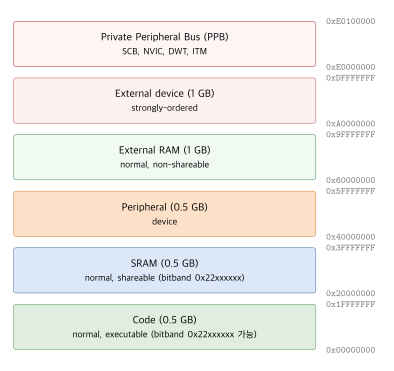
각 영역은 default access attribute가 다릅니다. MPU로 override 가능.
#2) Code / SRAM / Peripheral
| 영역 | 시작 주소 | 용도 |
|---|---|---|
| Code | 0x00000000 | Flash 또는 RAM(remap), .text |
| SRAM | 0x20000000 | RAM, .data, .bss, stack, heap |
| Peripheral | 0x40000000 | UART, SPI, GPIO 등 register |
| External RAM | 0x60000000 | SDRAM, QSPI XIP |
| External device | 0xA0000000 | Memory-mapped device |
| PPB | 0xE0000000 | SCB, NVIC, debug |
STM32F4 예:
Flash 0x08000000 ~ 0x080FFFFF (1 MB) (alias at 0x00000000 if BOOT0=0)SRAM1 0x20000000 ~ 0x2001BFFF (112 KB)SRAM2 0x2001C000 ~ 0x2001FFFF (16 KB)GPIOA 0x40020000USART1 0x40011000NVIC 0xE000E100#3) Memory attribute — Strongly-Ordered, Device, Normal
세 가지 default attribute가 있습니다.
| Attribute | 영역 | 특성 |
|---|---|---|
| Normal | Code, SRAM, ext RAM | reorder, merge, cache 가능 |
| Device | Peripheral, ext device | 순서 보장, cache 불가 |
| Strongly-Ordered | PPB | 순서·완료 모두 엄격 |
// Peripheral write — Device 영역, side effect 있음GPIOC->BSRR = (1 << 5); // 즉시 핀에 반영, reorder 안 됨
// SRAM write — Normal, reorder/merge 가능buffer[0] = 1;buffer[1] = 2; // 컴파일러/CPU가 한 word write로 merge 가능DMA용 buffer를 SRAM이 아닌 strongly-ordered region에 두면 throughput이 큰 폭으로 떨어집니다.
#4) Bitband region (M3/M4)
SRAM과 peripheral 영역의 첫 1 MB는 bitband alias를 갖습니다. 32-bit access로 한 비트만 read/modify/write 합니다.
SRAM bitband:
- 원본: 0x20000000 ~ 0x200FFFFF (1 MB)
- alias: 0x22000000 ~ 0x23FFFFFF (32 MB)
- alias address = 0x22000000 + (byte_offset × 32) + (bit_num × 4)
Peripheral bitband:
- 원본: 0x40000000 ~ 0x400FFFFF
- alias: 0x42000000 ~ 0x43FFFFFF
// 0x20000000 byte 0 의 bit 3을 1로#define BITBAND_SRAM(addr, bit) ((volatile uint32_t *) \ (0x22000000 + ((addr - 0x20000000) * 32) + (bit * 4)))
*BITBAND_SRAM(0x20000000, 3) = 1; // bit 3 만 set, race-freeRead-modify-write를 한 명령으로 만들어 ISR과의 race를 피할 수 있습니다. Cortex-M7은 bitband를 제거했습니다(LDREX/STREX 사용).
#5) MPU로 attribute override
MPU region을 정의하면 default attribute를 override합니다.
// DMA buffer를 non-cacheable로 설정 (M7)MPU->RNR = 0; // region 0MPU->RBAR = 0x20020000; // 시작 주소MPU->RASR = MPU_RASR_ENABLE_Msk | (15 << MPU_RASR_SIZE_Pos) // 64KB (2^16) | MPU_RASR_S_Msk // shareable | MPU_RASR_B_Msk; // bufferable, non-cacheableMPU->CTRL = MPU_CTRL_ENABLE_Msk;#코드 / 실제 사용 예
Linker script에서 메모리 영역을 정의합니다.
MEMORY{ FLASH (rx) : ORIGIN = 0x08000000, LENGTH = 1024K SRAM1 (rwx) : ORIGIN = 0x20000000, LENGTH = 112K SRAM2 (rwx) : ORIGIN = 0x2001C000, LENGTH = 16K CCM (rwx) : ORIGIN = 0x10000000, LENGTH = 64K /* TCM */}
SECTIONS{ .text : { *(.text*) } > FLASH .rodata : { *(.rodata*) } > FLASH .data : { *(.data*) } > SRAM1 AT > FLASH .bss : { *(.bss*) } > SRAM1 .ccmram : { *(.ccmram) } > CCM}CCM(Closely Coupled Memory)은 STM32F4의 64KB TCM 영역으로, CPU가 0-wait state로 접근합니다. DMA는 못 접근하므로 stack 또는 ISR critical data 용도가 좋습니다.
#측정 / 비교
| 영역 | 접근 cycle (STM32F4 @ 168 MHz) |
|---|---|
| Flash (cached) | 1 cycle |
| Flash (no cache) | 5 ~ 6 cycle |
| SRAM | 1 cycle |
| CCM (TCM) | 1 cycle |
| External SDRAM | 5 ~ 15 cycle |
| Peripheral | 2 ~ 3 cycle (AHB-APB bridge) |
| PPB | 1 ~ 2 cycle |
| Bitband alias 사용 | 효과 |
|---|---|
| GPIO 비트 toggle | atomic, race 없음 |
| Flag 변수 set/clear | ISR-safe |
#자주 보는 함정
⚠️ DMA buffer를 cached 영역에 그대로 둠
M7의 SRAM은 default cacheable입니다. DMA가 update한 memory를 CPU가 cache에서 stale로 읽습니다. MPU로 non-cacheable region을 만들거나 매번 invalidate.
⚠️ Peripheral write를 reorder된 채 다음 access
Device 영역은 reorder 안 되지만, normal 영역에서 peripheral로 가는 chain은 컴파일러가 reorder합니다. volatile 또는 memory barrier 필요.
⚠️ Stack을 SRAM 끝에 두지 않고 .bss 옆에
stack overflow 시 .bss와 .data를 손상시켜 디버깅이 어려워집니다. SRAM 끝에 두고 MPU로 stack guard region을 만듭니다.
⚠️ Cortex-M7에서 bitband 코드 그대로 사용
M7은 bitband가 없어 hardfault 발생합니다. LDREX/STREX 또는 atomic intrinsic으로 대체.
⚠️ Boot remap 무시
STM32 BOOT0 핀에 따라 0x00000000이 flash, SRAM, system memory(ROM bootloader)로 alias됩니다. Linker는 항상 실제 주소(0x08000000)를 쓰는 게 안전합니다.
#정리
- Cortex-M의 4GB 주소공간은 Code, SRAM, Peripheral, External, PPB로 표준 분할됩니다.
- 각 영역은 default attribute(Normal/Device/Strongly-Ordered)를 갖고, MPU로 override 가능합니다.
- Bitband region으로 단일 비트 atomic access가 가능합니다(M3/M4 only).
- Linker script에서 chip의 실제 주소(0x08000000 등)를 기준으로 영역을 정의합니다.
- DMA buffer, peripheral access, stack 배치는 attribute와 coherency를 고려해야 합니다.
다음 편에서는 **ARM 캐시 (L1/L2)**를 다룹니다. Cortex-M7과 Cortex-A의 cache 관리입니다.
#관련 항목
Modern Embedded Recipes · 18 of 152
- 1 Modern Embedded Recipes — 모던 임베디드 실전 레시피 시리즈 소개
- 2 디지털 신호 기초 — Voltage Level·Edge·Setup/Hold 분석
- 3 임베디드 클럭과 타이밍 — Skew·Jitter·PLL·MMCM 분석
- 4 GPIO 내부 구조 분해 — Push-Pull·Open-Drain·Schmitt Trigger
- 5 UART 하드웨어 동작 분석 — Baud Rate·Framing·FIFO
- 6 SPI 하드웨어 분석 — Clock Mode·MOSI/MISO·Chip Select
- 7 I2C 하드웨어 분석 — Open-Drain·Clock Stretching·Arbitration
- 8 ADC 동작 원리 — SAR·Sigma-Delta·Pipelined 비교
- 9 DAC 동작 원리 — R-2R Ladder·Sigma-Delta·Settling Time
- 10 PWM 신호 생성 분석 — Duty·Frequency·Dead Time·Center-Aligned
- 11 CAN 버스 전기적 특성 — Differential·Termination·Dominant/Recessive
- 12 RS-485·RS-422 차동 신호 분석 — Termination·Biasing·Topology
- 13 LVDS 차동 신호 분석 — Common-Mode·Impedance·Eye Pattern
- 14 ARM Cortex-M 시리즈 비교 — M0·M3·M4·M7·M33·M55 분석
- 15 ARM Cortex-A 시리즈 비교 — A53·A55·A72·A78·X1 분석
- 16 ARM 레지스터 구조 분석 — R0~R15·CPSR·SPSR·Banked Registers
- 17 Cortex-M 예외 처리 — Vector Table·NVIC·Tail-Chaining 추적
- 18 ARM 메모리 맵 분석 — Normal·Device·Strongly-Ordered Region
- 19 ARM L1·L2 캐시 분석 — Set Associative·Inclusive·Maintenance
- 20 ARM MPU 활용 — Region·Attribute·Privilege Separation
- 21 ARM MMU 기초 분석 — Translation Table·TLB·ASID
- 22 ARM TrustZone-M 기초 — Secure/Non-Secure·NSC·MPC
- 23 ARM Memory Barrier 실전 — DMB·DSB·ISB·DMA·MMIO
- 24 임베디드 크로스 컴파일러 분석 — GCC·Clang·Sysroot 구성
- 25 C 컴파일 4단계 — Preprocess·Compile·Assemble·Link 추적
- 26 ELF 파일 구조 분석 — Section·Segment·Symbol Table·DWARF
- 27 링커 스크립트 기초 — SECTIONS·MEMORY·entry point
- 28 링커 스크립트 고급 — Overlay·BSS·init_array·LMA/VMA
- 29 임베디드 스타트업 코드 분석 — Reset_Handler·Vector Table·SystemInit
- 30 C 런타임 crt0 분석 — Stack·BSS Zero·Data Copy·atexit
- 31 임베디드 메모리 레이아웃 — .text·.rodata·.data·.bss·.heap·.stack
- 32 임베디드 컴파일러 최적화 분석 — -O0~-O3·-Os·-LTO 비교
- 33 Map 파일 분석 — Symbol·Section·Size 추적으로 코드 크기 진단
- 34 Make·CMake 크로스 컴파일 — Toolchain File·Sysroot 통합
- 35 임베디드 Bootloader 체인 — BootROM·SPL·U-Boot·Kernel·Secure Boot
- 36 첫 bare-metal 프로그램 작성 — Linker·Startup·main의 최소 구성
- 37 MMIO 레지스터 직접 접근 — volatile·Memory Map·Aliasing 분석
- 38 GPIO 드라이버 직접 구현 — STM32 HAL 없이 레지스터로
- 39 임베디드 클럭 설정 분석 — HSE·PLL·SYSCLK·AHB/APB 분주
- 40 Cortex-M 인터럽트 핸들링 — NVIC·Priority·Vector·EXTI
- 41 SysTick 타이머 활용 — 24-bit Counter·1ms Tick·delay 구현
- 42 UART 드라이버 구현 — polling·interrupt·DMA 3가지 방식 비교
- 43 SPI 드라이버 구현 — Master·Slave·CRC·DMA
- 44 I2C 드라이버 구현 — Master·7-bit/10-bit·Clock Stretching 처리
- 45 임베디드 DMA 기초 — Memory-to-Memory·Peripheral·Circular Mode
- 46 저전력 모드 분석 — Sleep·Stop·Standby·Wake-up Source
- 47 IWDG·WWDG 워치독 구현 — Independent vs Window 비교
- 48 임베디드 Flash 프로그래밍 — Erase·Program·Read While Write
- 49 DDR 초기화 실패 진단 — Timing·Calibration·Walking Bit Test
- 50 PWM 출력 실전 — LED 밝기·모터 속도 제어
- 51 DC 모터 제어 — H-Bridge·PWM Duty·Encoder Feedback
- 52 스테퍼 모터 제어 — Full Step·Half Step·Microstepping
- 53 서보 모터 제어 — PWM 1ms~2ms·Closed Loop·PID
- 54 Character LCD 제어 — HD44780·4-bit Mode·Custom Char
- 55 SPI OLED 제어 — SSD1306·Frame Buffer·Page 단위 갱신
- 56 TFT 디스플레이 구동 — RGB565·FSMC·LTDC·DMA2D
- 57 환경 센서 활용 — BME280 온습압·SHT3x·BMP180 비교
- 58 IMU 센서 활용 — MPU6050·LSM6DSO·Sensor Fusion
- 59 CAN 통신 구현 — bxCAN·Filter·Mailbox·CAN-FD
- 60 USB Device 기초 — Descriptor·Enumeration·Endpoint·HID/CDC
- 61 Ethernet MAC+PHY 통합 — RMII·lwIP·DMA Descriptor
- 62 SD Card + FatFs 구현 — SPI/SDIO 모드·CSD/CID·Wear
- 63 RTC 활용 — Calendar·Alarm·Wake-up Timer·Backup Domain
- 64 RTOS 도입 결정 분석 — Super Loop vs RTOS 트레이드오프
- 65 RTOS Task 설계 패턴 — 우선순위·스택·State Machine
- 66 RTOS Scheduler 동작 분석 — Tick·Context Switch·Yield
- 67 RTOS Semaphore 활용 — Binary·Counting·ISR Give
- 68 RTOS Mutex 활용 — Recursive·Priority Inheritance 적용
- 69 RTOS Queue 활용 — By-Value·By-Reference·Timeout 패턴
- 70 RTOS Event Group 활용 — Bit Wait·Sync·Notify
- 71 RTOS Software Timer 활용 — One-shot·Auto-reload·Daemon Task
- 72 ISR-Safe API 설계 — Reentrant·Atomic·Defer 패턴
- 73 Priority Inversion 진단·예방 — Mars Pathfinder Lesson 추적
- 74 Timer Wheel 분석 — Hashed·Hierarchical·O(1) Tick
- 75 RTOS 디버깅 기법 — Tracealyzer·SystemView·Stack 추적
- 76 임베디드 Linux 부팅 흐름 분석 — BootROM·U-Boot·Kernel·init
- 77 U-Boot 활용 — bootcmd·env·tftp·boot.scr 분석
- 78 Device Tree 실전 — DTS·DTB·Overlay·Phandle 추적
- 79 Device Tree Overlay 적용 — Runtime fragment·dtoverlay
- 80 임베디드 커널 빌드 — defconfig·menuconfig·Image·zImage
- 81 커널 모듈 기초 — init/exit·Parameter·KBuild·DKMS
- 82 캐릭터 드라이버 작성 — file_operations·cdev·register_chrdev
- 83 Platform 드라이버 작성 — probe·remove·of_match·DT 바인딩
- 84 mmap 4가지 모드 — Anonymous·File·Shared·Huge Page
- 85 epoll 실전 — LT·ET·ONESHOT·EXCLUSIVE 비교
- 86 UIO·VFIO 분석 — User-Space Driver와 IOMMU 격리
- 87 sysfs·configfs 활용 — kobject 기반 User 인터페이스
- 88 IRQ Affinity 튜닝 — smp_affinity·isolcpus·irqbalance
- 89 루트 파일시스템 구축 — Buildroot 기초·Package·Toolchain
- 90 임베디드 동적 메모리 — malloc 위험·결정성·대안 분석
- 91 메모리 정렬과 패딩 분석 — Natural·Strict Alignment·Trap
- 92 Cache Line Alignment — alignas·Padding·SoA 적용
- 93 DMA-Friendly Allocator — dma_alloc_coherent·IOMMU·Pool
- 94 Zero-Copy Pipeline — DMA-BUF·sendfile·io_uring·splice
- 95 NUMA Memory Topology — numactl·numa_alloc·HBM 적용
- 96 SIMD 활용 분석 — Intrinsics·Auto-Vectorization·OpenMP SIMD
- 97 ARM NEON 심화 — Matrix Multiply·FFT·Image Filter 적용
- 98 임베디드 스택 분석 — high-water·overflow 탐지
- 99 임베디드 코드 크기 최적화 — -Os·LTO·Section Garbage Collection
- 100 임베디드 전력 최적화 — Sleep Mode·Clock Gating·DVFS
- 101 WCET 분석 기법 — Static·Measurement·Hybrid 방법론
- 102 Lock-Free Ring Buffer 구현 — SPSC·Power-of-2·Memory Order
- 103 Wait-Free Signaling — Atomic Flag·Sequence·Latest-Value
- 104 RCU (Read-Copy-Update) 기초 — Quiescent State·Grace Period
- 105 Hazard Pointer 분석 — Lock-Free Memory Reclamation
- 106 Compare-And-Swap 패턴 — Stack·Counter·Linked List 적용
- 107 Atomic Operation 비용 분석 — Fence·Cache Line·Contention
- 108 Spinlock vs Mutex 결정 가이드 — Context Switch·Hold Time
- 109 ABA 문제 회피 — Tagged Pointer·Hazard·Generation Counter
- 110 False Sharing 해결 — Cache Line Padding·SoA 적용
- 111 MPMC Queue 구현 — Multi-producer Multi-consumer Lock-Free
- 112 임베디드 디버깅 마인드셋 — 가설·격리·재현·이분탐색
- 113 JTAG·SWD 안 붙을 때 — 핀·전압·속도·세션 진단
- 114 GDB 원격 디버깅 — OpenOCD·J-Link·target remote 구성
- 115 Cortex-M 하드폴트 분석 — Stacked Frame·CFSR 읽기
- 116 UART 안 찍힐 때 — Bare-metal 체크리스트
- 117 임베디드 부팅 실패 진단 — 단계별 Isolation
- 118 인터럽트 누락·중복 진단 — Priority·Pending·Re-entry 추적
- 119 메모리 오버플로우·오염 진단 — Canary·MPU·Pattern 분석
- 120 타이밍·Race 진단 — Heisenbug 잡는 법
- 121 통신 프로토콜 분석 — Logic Analyzer와 Protocol Decoder
- 122 임베디드 로깅 시스템 설계 — 레벨·버퍼·SWO·Deferred
- 123 임베디드 포스트모템 분석 — Core Dump와 Field Crash
- 124 FPGA 기초 분석 — LUT·FF·BRAM·DSP 자원 구조
- 125 Vivado 사용법 — Project·Constraint·Synth·Impl·Bitstream
- 126 PCIe BAR 매핑 분석 — Config Space·Enumeration·MMIO 접근
- 127 AXI 인터페이스 — AXI4·AXI4-Lite·AXI-Stream 비교
- 128 Zynq PS-PL 통신 — GP·HP·ACP 인터페이스 선택
- 129 Mailbox Protocol 분석 — Host와 Accelerator를 잇는 Doorbell
- 130 Command Queue·Submission Queue — NVMe·XDMA 공통 패턴
- 131 DMA Completion 메커니즘 — Interrupt·Polling·Completion Ring
- 132 PCIe Streaming 분석 — BAR Type·MSI-X·Kernel Bypass
- 133 Vitis HLS 분석 — Pragma·Pipeline II·Dataflow 실전 감각
- 134 HLS 최적화 기법 — Pipeline·Unroll·Partition·Dataflow
- 135 Vitis AI 분석 — DPU·xmodel·VART
- 136 OpenCL on FPGA — Kernel·Channel·Burst Memory 분석
- 137 Intel Quartus 사용법 — Platform Designer·Nios II·HLS
- 138 Edge Inference 분석 — Cloud vs Edge·Latency·Privacy
- 139 NPU 아키텍처 분석 — Ethos·Hexagon·Systolic Array 비교
- 140 딥러닝 Quantization 분석 — PTQ·QAT·INT8·INT4·Calibration
- 141 TensorRT 분석 — ONNX→Engine·FP16·INT8·DLA·Multi-Stream
- 142 TFLite Micro 분석 — Op Resolver·Tensor Arena·Cortex-M
- 143 ONNX Runtime 분석 — Execution Provider와 Cross-Platform 배포
- 144 Edge Thermal Management — Throttling·DVFS·Fan Curve·Sustained
- 145 NVIDIA Jetson 분석 — Nano·Xavier·Orin·Thor·JetPack·DLA·VPI
- 146 Zero-Copy Camera Pipeline — V4L2·DMA-BUF·GPU Import·NPU 직결
- 147 온디바이스 LLM 추론 — llama.cpp·GGUF·MLX·KV Cache·NPU Backend
- 148 Cortex-M33 TF-M·TrustZone — Secure Firmware·PSA·MCUboot
- 149 Matter·Thread 분석 — IoT 통합 표준·Commissioning·Multi-Fabric
- 150 PCIe → CXL 진화 — 같은 PHY 위 cache-coherent 프로토콜 추가
- 151 QEMU CXL Type 3 디바이스 에뮬레이션 — 노트북에서 CXL 개발 환경 구축
- 152 Linux CXL 드라이버 분석 — cxl_pci·cxl_core·region·DAX
관련 글
ARM L1·L2 캐시 분석 — Set Associative·Inclusive·Maintenance
I-Cache/D-Cache·write-through vs write-back·invalidate/clean.
같은 시리즈에서 이어 읽기
ARM MPU 활용 — Region·Attribute·Privilege Separation
Region setup·attributes·fault analysis — 메모리 보호의 실전.
같은 시리즈에서 이어 읽기
JTAG·SWD·CoreSight 분석 — ARM 디버그 인터페이스 비교
TAP 상태 머신, SWD 패킷, ARM CoreSight (DAP/FPB/DWT/ITM/ETM) 회로 구조.
공통 태그 기반 추천
이 글을 참조하는 글 (4)
- MMIO 레지스터 직접 접근 — volatile·Memory Map·Aliasing 분석 — Modern Embedded Recipes
- ARM MPU 활용 — Region·Attribute·Privilege Separation — Modern Embedded Recipes
- ARM L1·L2 캐시 분석 — Set Associative·Inclusive·Maintenance — Modern Embedded Recipes
- Cortex-M 예외 처리 — Vector Table·NVIC·Tail-Chaining 추적 — Modern Embedded Recipes