NUMA Memory Topology — numactl·numa_alloc·HBM 적용
#한 줄 요약
“NUMA = node별 local memory.” Local access는 빠르고, remote access는 1.5~2배 느립니다. Topology를 모른 채 thread를 띄우면 성능이 묵묵히 절반으로 떨어집니다.
#어떤 상황에서 쓰나
2-socket 서버에서 thread를 무작정 띄우면 OS scheduler가 socket 사이를 옮겨 다닙니다. 그동안 thread의 hot data는 한 node에만 있어서 다른 socket으로 옮겨갈 때마다 cross-node access가 발생합니다. 같은 코드가 socket 하나에 pin했을 때보다 30~50% 느려지는 경우가 흔합니다.
자동차 central computing의 Cortex-A78AE 8 core SoC도 cluster 두 개로 나뉘고 각 cluster가 다른 L2와 DRAM channel을 갖습니다. 클래식한 NUMA는 아니지만 cluster 간 latency 차이는 같은 형태로 나타납니다. ASIL workload는 cluster 0, infotainment는 cluster 1 같은 분리가 시작점입니다.
#핵심 개념
2-socket 서버의 토폴로지를 그림으로 보면 local과 remote의 차이가 분명합니다.
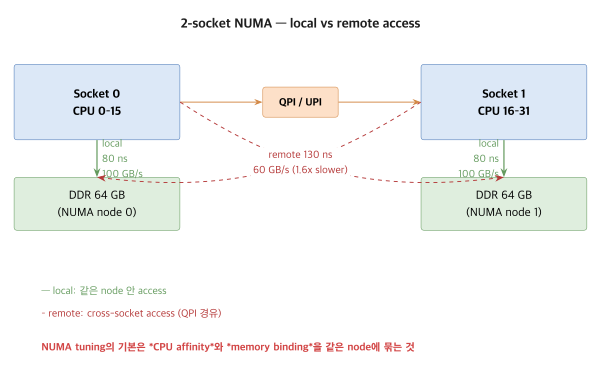
Server 2-socket Socket 0 (CPU 0~15) ── DDR 64 GB (node 0) │ UPI / QPI / CCIX │ Socket 1 (CPU 16~31) ── DDR 64 GB (node 1)
Latency local 80 ns, remote 130 ns (1.6x)Bandwidth local 100 GB/s, remote 60 GB/sTopology의 핵심 두 가지는 CPU affinity와 memory binding입니다. 둘 중 하나만 묶고 다른 하나가 움직이면 cross-node access가 발생합니다. 둘 다 같은 node에 묶는 것이 NUMA tuning의 기본입니다.
#코드 / 실제 사용 예
#numactl --hardware로 토폴로지 확인
numactl --hardware
# available: 2 nodes (0-1)# node 0 cpus: 0 1 2 3 4 5 6 7# node 0 size: 65536 MB# node 1 cpus: 8 9 10 11 12 13 14 15# node 1 size: 65536 MB# node distances:# node 0 1# 0: 10 21# 1: 21 10distance 값이 10이면 local, 20 이상이면 remote입니다. 이 표가 NUMA tuning의 출발점입니다.
#실행 시 binding
numactl --cpunodebind=0 --membind=0 ./prog # 한 node로 묶음numactl --interleave=all ./prog # 큰 workload 분산numactl --localalloc ./prog # 자기 node에 자동 alloc--interleave는 throughput 위주, --membind는 latency 위주의 선택입니다.
#libnuma로 명시 alloc
#include <numa.h>
if (numa_available() < 0) return -1;
int node = numa_node_of_cpu(sched_getcpu());void *p = numa_alloc_onnode(SIZE, node);numa_free(p, SIZE);또는 thread의 default policy를 바꿔 둡니다.
struct bitmask *mask = numa_allocate_nodemask();numa_bitmask_setbit(mask, 0);numa_set_membind(mask);/* 이후 모든 alloc이 node 0에 */#Per-thread CPU + NUMA pin
#include <pthread.h>#include <numa.h>
void *thread_func(void *p) { cpu_set_t set; CPU_ZERO(&set); CPU_SET(target_cpu, &set); pthread_setaffinity_np(pthread_self(), sizeof(set), &set);
int node = numa_node_of_cpu(target_cpu); struct bitmask *mask = numa_allocate_nodemask(); numa_bitmask_setbit(mask, node); numa_set_membind(mask);
work(); return NULL;}CPU affinity와 memory binding을 같은 node로 묶는 패턴입니다. DPDK, 5G UPF, Cassandra가 표준으로 씁니다.
#NUMA-aware allocator
LD_PRELOAD=libjemalloc.so ./progjemalloc은 per-thread arena를 가지며 NUMA를 인지합니다. tcmalloc도 비슷한 구조입니다. 일반 glibc malloc보다 cross-node fragmentation이 훨씬 적습니다.
#HBM과 CXL을 NUMA node로
HBM3 stacked memory (GPU·AI accelerator 옆) 819 GB/s per stack, 5~10 ns latency
CXL 2.0/3.0 PCIe 기반 coherent memory pool multi-host 공유 가능/* HBM에 hot, DRAM에 cold */numa_alloc_onnode(hot_data_size, HBM_NODE);numa_alloc_onnode(cold_data_size, DRAM_NODE);numactl --hardware가 보여주는 node는 HBM과 CXL을 논리적으로 같은 NUMA로 표시합니다. Tiered memory의 표준 인터페이스입니다.
#자동차 ECU의 mini-NUMA
Cortex-A78AE x 8 (2 cluster) cluster 0 4 core + L2 + DRAM channel 0 cluster 1 4 core + L2 + DRAM channel 1
ASIL workload cluster 0에 pinInfotainment cluster 1에 pinNVIDIA Drive Thor와 Mobileye EyeQ7 같은 자율주행 SoC도 같은 구조입니다. Cluster 간 cache coherence는 보장되지만 latency는 분명히 다릅니다.
#Kernel automatic balancing
echo 1 > /proc/sys/kernel/numa_balancingKernel이 page와 thread를 자동 migration합니다. 단점은 예측 불가능하다는 것입니다. RT나 latency-critical workload에서는 자동 balancing을 끄고 명시 pinning을 선호합니다.
#측정 — numastat
numastat -p $(pidof prog)
# Node 0 Node 1# Heap 12000 200 ← 거의 node 0# Stack 0.5 0# Private 3000 100특정 process가 두 node 메모리를 얼마나 쓰는지 한눈에 보입니다.
#perf로 cross-node access 측정
perf stat -e mem_load_l3_miss_retired.local_dram,\mem_load_l3_miss_retired.remote_dram ./progremote_dram 비율이 높으면 cross-node access가 일어나고 있다는 신호입니다. 보통 5% 이하를 목표로 합니다.
#Multi-socket RT tuning
isolcpus=8-15 nohz_full=8-15 rcu_nocbs=8-15taskset -c 8-15 numactl --membind=1 ./rt_appCPU isolation으로 8~15번 코어를 OS scheduler에서 제외하고 그 위에서 RT app을 실행합니다. 산업·자동차·금융 latency-critical 시스템의 표준 패턴입니다.
#측정 / 성능 비교
2-socket Xeon에서 4 GB array sum 결과입니다.
| 실행 | 시간 | remote DRAM 비율 |
|---|---|---|
| default (anywhere) | 2.30 s | 38% |
| numactl —cpunodebind=0 —membind=0 | 1.45 s | 2% |
| numactl —interleave=all | 1.70 s | 50% |
Latency 위주면 single-node pin이 가장 빠르고, throughput 위주면 interleave가 안정적입니다.
Cortex-A78AE 8 core SoC에서 image processing pipeline입니다.
cluster scheduler 자유 jitter 6.2 mscluster 0에 pin jitter 1.8 msMini-NUMA에서도 pin이 jitter를 크게 줄입니다.
#자주 보는 함정
첫 touch 정책 무시
malloc(huge_data); /* 어느 node? — 첫 page fault가 일어난 CPU의 node */Main thread가 alloc하고 worker thread가 다른 node에서 쓰면 remote access가 됩니다. numa_alloc_onnode로 명시하거나 worker가 첫 touch하도록 구조를 바꿉니다.
Thread migration 빈번
/* 일부 thread만 sched_setaffinity */CPU affinity가 없는 thread는 OS가 자유롭게 옮깁니다. Hot path thread는 모두 pin하는 편이 안전합니다.
서버에서 NUMA를 무시
큰 array 하나를 main thread가 잡고 모든 worker가 공유하면 remote access가 사방에서 발생합니다. numa_interleave_memory로 분산하거나 per-thread alloc으로 쪼갭니다.
임베디드에서 “NUMA 없음” 가정
Cortex-A dual-cluster SoC도 inter-cluster latency가 있습니다. Mini-NUMA로 다루는 편이 jitter 분석에 유리합니다.
Automatic balancing에만 의존
Kernel auto balancing은 background로 동작하지만 RT spec을 보장하지 못합니다. Hard real-time workload는 명시 pin이 정답입니다.
#정리
- NUMA는 node별 local memory를 가지며 remote access는 1.5~2배 느립니다.
- CPU affinity와 memory binding을 같은 node로 묶는 것이 기본 패턴입니다.
numactl은 운영용,libnuma는 프로그램용 API입니다.- HBM과 CXL도 NUMA node로 노출되어 tiered memory 인터페이스가 됩니다.
- 자동차·자율주행 SoC는 cluster 단위 mini-NUMA로 다룹니다.
numastat과perf remote_dram이벤트로 cross-node access를 측정합니다.- RT/latency-critical workload는 auto balancing을 끄고 명시 pin을 씁니다.
다음 편은 SIMD intrinsics입니다.
#관련 항목
Modern Embedded Recipes · 95 of 152
- 1 Modern Embedded Recipes — 모던 임베디드 실전 레시피 시리즈 소개
- 2 디지털 신호 기초 — Voltage Level·Edge·Setup/Hold 분석
- 3 임베디드 클럭과 타이밍 — Skew·Jitter·PLL·MMCM 분석
- 4 GPIO 내부 구조 분해 — Push-Pull·Open-Drain·Schmitt Trigger
- 5 UART 하드웨어 동작 분석 — Baud Rate·Framing·FIFO
- 6 SPI 하드웨어 분석 — Clock Mode·MOSI/MISO·Chip Select
- 7 I2C 하드웨어 분석 — Open-Drain·Clock Stretching·Arbitration
- 8 ADC 동작 원리 — SAR·Sigma-Delta·Pipelined 비교
- 9 DAC 동작 원리 — R-2R Ladder·Sigma-Delta·Settling Time
- 10 PWM 신호 생성 분석 — Duty·Frequency·Dead Time·Center-Aligned
- 11 CAN 버스 전기적 특성 — Differential·Termination·Dominant/Recessive
- 12 RS-485·RS-422 차동 신호 분석 — Termination·Biasing·Topology
- 13 LVDS 차동 신호 분석 — Common-Mode·Impedance·Eye Pattern
- 14 ARM Cortex-M 시리즈 비교 — M0·M3·M4·M7·M33·M55 분석
- 15 ARM Cortex-A 시리즈 비교 — A53·A55·A72·A78·X1 분석
- 16 ARM 레지스터 구조 분석 — R0~R15·CPSR·SPSR·Banked Registers
- 17 Cortex-M 예외 처리 — Vector Table·NVIC·Tail-Chaining 추적
- 18 ARM 메모리 맵 분석 — Normal·Device·Strongly-Ordered Region
- 19 ARM L1·L2 캐시 분석 — Set Associative·Inclusive·Maintenance
- 20 ARM MPU 활용 — Region·Attribute·Privilege Separation
- 21 ARM MMU 기초 분석 — Translation Table·TLB·ASID
- 22 ARM TrustZone-M 기초 — Secure/Non-Secure·NSC·MPC
- 23 ARM Memory Barrier 실전 — DMB·DSB·ISB·DMA·MMIO
- 24 임베디드 크로스 컴파일러 분석 — GCC·Clang·Sysroot 구성
- 25 C 컴파일 4단계 — Preprocess·Compile·Assemble·Link 추적
- 26 ELF 파일 구조 분석 — Section·Segment·Symbol Table·DWARF
- 27 링커 스크립트 기초 — SECTIONS·MEMORY·entry point
- 28 링커 스크립트 고급 — Overlay·BSS·init_array·LMA/VMA
- 29 임베디드 스타트업 코드 분석 — Reset_Handler·Vector Table·SystemInit
- 30 C 런타임 crt0 분석 — Stack·BSS Zero·Data Copy·atexit
- 31 임베디드 메모리 레이아웃 — .text·.rodata·.data·.bss·.heap·.stack
- 32 임베디드 컴파일러 최적화 분석 — -O0~-O3·-Os·-LTO 비교
- 33 Map 파일 분석 — Symbol·Section·Size 추적으로 코드 크기 진단
- 34 Make·CMake 크로스 컴파일 — Toolchain File·Sysroot 통합
- 35 임베디드 Bootloader 체인 — BootROM·SPL·U-Boot·Kernel·Secure Boot
- 36 첫 bare-metal 프로그램 작성 — Linker·Startup·main의 최소 구성
- 37 MMIO 레지스터 직접 접근 — volatile·Memory Map·Aliasing 분석
- 38 GPIO 드라이버 직접 구현 — STM32 HAL 없이 레지스터로
- 39 임베디드 클럭 설정 분석 — HSE·PLL·SYSCLK·AHB/APB 분주
- 40 Cortex-M 인터럽트 핸들링 — NVIC·Priority·Vector·EXTI
- 41 SysTick 타이머 활용 — 24-bit Counter·1ms Tick·delay 구현
- 42 UART 드라이버 구현 — polling·interrupt·DMA 3가지 방식 비교
- 43 SPI 드라이버 구현 — Master·Slave·CRC·DMA
- 44 I2C 드라이버 구현 — Master·7-bit/10-bit·Clock Stretching 처리
- 45 임베디드 DMA 기초 — Memory-to-Memory·Peripheral·Circular Mode
- 46 저전력 모드 분석 — Sleep·Stop·Standby·Wake-up Source
- 47 IWDG·WWDG 워치독 구현 — Independent vs Window 비교
- 48 임베디드 Flash 프로그래밍 — Erase·Program·Read While Write
- 49 DDR 초기화 실패 진단 — Timing·Calibration·Walking Bit Test
- 50 PWM 출력 실전 — LED 밝기·모터 속도 제어
- 51 DC 모터 제어 — H-Bridge·PWM Duty·Encoder Feedback
- 52 스테퍼 모터 제어 — Full Step·Half Step·Microstepping
- 53 서보 모터 제어 — PWM 1ms~2ms·Closed Loop·PID
- 54 Character LCD 제어 — HD44780·4-bit Mode·Custom Char
- 55 SPI OLED 제어 — SSD1306·Frame Buffer·Page 단위 갱신
- 56 TFT 디스플레이 구동 — RGB565·FSMC·LTDC·DMA2D
- 57 환경 센서 활용 — BME280 온습압·SHT3x·BMP180 비교
- 58 IMU 센서 활용 — MPU6050·LSM6DSO·Sensor Fusion
- 59 CAN 통신 구현 — bxCAN·Filter·Mailbox·CAN-FD
- 60 USB Device 기초 — Descriptor·Enumeration·Endpoint·HID/CDC
- 61 Ethernet MAC+PHY 통합 — RMII·lwIP·DMA Descriptor
- 62 SD Card + FatFs 구현 — SPI/SDIO 모드·CSD/CID·Wear
- 63 RTC 활용 — Calendar·Alarm·Wake-up Timer·Backup Domain
- 64 RTOS 도입 결정 분석 — Super Loop vs RTOS 트레이드오프
- 65 RTOS Task 설계 패턴 — 우선순위·스택·State Machine
- 66 RTOS Scheduler 동작 분석 — Tick·Context Switch·Yield
- 67 RTOS Semaphore 활용 — Binary·Counting·ISR Give
- 68 RTOS Mutex 활용 — Recursive·Priority Inheritance 적용
- 69 RTOS Queue 활용 — By-Value·By-Reference·Timeout 패턴
- 70 RTOS Event Group 활용 — Bit Wait·Sync·Notify
- 71 RTOS Software Timer 활용 — One-shot·Auto-reload·Daemon Task
- 72 ISR-Safe API 설계 — Reentrant·Atomic·Defer 패턴
- 73 Priority Inversion 진단·예방 — Mars Pathfinder Lesson 추적
- 74 Timer Wheel 분석 — Hashed·Hierarchical·O(1) Tick
- 75 RTOS 디버깅 기법 — Tracealyzer·SystemView·Stack 추적
- 76 임베디드 Linux 부팅 흐름 분석 — BootROM·U-Boot·Kernel·init
- 77 U-Boot 활용 — bootcmd·env·tftp·boot.scr 분석
- 78 Device Tree 실전 — DTS·DTB·Overlay·Phandle 추적
- 79 Device Tree Overlay 적용 — Runtime fragment·dtoverlay
- 80 임베디드 커널 빌드 — defconfig·menuconfig·Image·zImage
- 81 커널 모듈 기초 — init/exit·Parameter·KBuild·DKMS
- 82 캐릭터 드라이버 작성 — file_operations·cdev·register_chrdev
- 83 Platform 드라이버 작성 — probe·remove·of_match·DT 바인딩
- 84 mmap 4가지 모드 — Anonymous·File·Shared·Huge Page
- 85 epoll 실전 — LT·ET·ONESHOT·EXCLUSIVE 비교
- 86 UIO·VFIO 분석 — User-Space Driver와 IOMMU 격리
- 87 sysfs·configfs 활용 — kobject 기반 User 인터페이스
- 88 IRQ Affinity 튜닝 — smp_affinity·isolcpus·irqbalance
- 89 루트 파일시스템 구축 — Buildroot 기초·Package·Toolchain
- 90 임베디드 동적 메모리 — malloc 위험·결정성·대안 분석
- 91 메모리 정렬과 패딩 분석 — Natural·Strict Alignment·Trap
- 92 Cache Line Alignment — alignas·Padding·SoA 적용
- 93 DMA-Friendly Allocator — dma_alloc_coherent·IOMMU·Pool
- 94 Zero-Copy Pipeline — DMA-BUF·sendfile·io_uring·splice
- 95 NUMA Memory Topology — numactl·numa_alloc·HBM 적용
- 96 SIMD 활용 분석 — Intrinsics·Auto-Vectorization·OpenMP SIMD
- 97 ARM NEON 심화 — Matrix Multiply·FFT·Image Filter 적용
- 98 임베디드 스택 분석 — high-water·overflow 탐지
- 99 임베디드 코드 크기 최적화 — -Os·LTO·Section Garbage Collection
- 100 임베디드 전력 최적화 — Sleep Mode·Clock Gating·DVFS
- 101 WCET 분석 기법 — Static·Measurement·Hybrid 방법론
- 102 Lock-Free Ring Buffer 구현 — SPSC·Power-of-2·Memory Order
- 103 Wait-Free Signaling — Atomic Flag·Sequence·Latest-Value
- 104 RCU (Read-Copy-Update) 기초 — Quiescent State·Grace Period
- 105 Hazard Pointer 분석 — Lock-Free Memory Reclamation
- 106 Compare-And-Swap 패턴 — Stack·Counter·Linked List 적용
- 107 Atomic Operation 비용 분석 — Fence·Cache Line·Contention
- 108 Spinlock vs Mutex 결정 가이드 — Context Switch·Hold Time
- 109 ABA 문제 회피 — Tagged Pointer·Hazard·Generation Counter
- 110 False Sharing 해결 — Cache Line Padding·SoA 적용
- 111 MPMC Queue 구현 — Multi-producer Multi-consumer Lock-Free
- 112 임베디드 디버깅 마인드셋 — 가설·격리·재현·이분탐색
- 113 JTAG·SWD 안 붙을 때 — 핀·전압·속도·세션 진단
- 114 GDB 원격 디버깅 — OpenOCD·J-Link·target remote 구성
- 115 Cortex-M 하드폴트 분석 — Stacked Frame·CFSR 읽기
- 116 UART 안 찍힐 때 — Bare-metal 체크리스트
- 117 임베디드 부팅 실패 진단 — 단계별 Isolation
- 118 인터럽트 누락·중복 진단 — Priority·Pending·Re-entry 추적
- 119 메모리 오버플로우·오염 진단 — Canary·MPU·Pattern 분석
- 120 타이밍·Race 진단 — Heisenbug 잡는 법
- 121 통신 프로토콜 분석 — Logic Analyzer와 Protocol Decoder
- 122 임베디드 로깅 시스템 설계 — 레벨·버퍼·SWO·Deferred
- 123 임베디드 포스트모템 분석 — Core Dump와 Field Crash
- 124 FPGA 기초 분석 — LUT·FF·BRAM·DSP 자원 구조
- 125 Vivado 사용법 — Project·Constraint·Synth·Impl·Bitstream
- 126 PCIe BAR 매핑 분석 — Config Space·Enumeration·MMIO 접근
- 127 AXI 인터페이스 — AXI4·AXI4-Lite·AXI-Stream 비교
- 128 Zynq PS-PL 통신 — GP·HP·ACP 인터페이스 선택
- 129 Mailbox Protocol 분석 — Host와 Accelerator를 잇는 Doorbell
- 130 Command Queue·Submission Queue — NVMe·XDMA 공통 패턴
- 131 DMA Completion 메커니즘 — Interrupt·Polling·Completion Ring
- 132 PCIe Streaming 분석 — BAR Type·MSI-X·Kernel Bypass
- 133 Vitis HLS 분석 — Pragma·Pipeline II·Dataflow 실전 감각
- 134 HLS 최적화 기법 — Pipeline·Unroll·Partition·Dataflow
- 135 Vitis AI 분석 — DPU·xmodel·VART
- 136 OpenCL on FPGA — Kernel·Channel·Burst Memory 분석
- 137 Intel Quartus 사용법 — Platform Designer·Nios II·HLS
- 138 Edge Inference 분석 — Cloud vs Edge·Latency·Privacy
- 139 NPU 아키텍처 분석 — Ethos·Hexagon·Systolic Array 비교
- 140 딥러닝 Quantization 분석 — PTQ·QAT·INT8·INT4·Calibration
- 141 TensorRT 분석 — ONNX→Engine·FP16·INT8·DLA·Multi-Stream
- 142 TFLite Micro 분석 — Op Resolver·Tensor Arena·Cortex-M
- 143 ONNX Runtime 분석 — Execution Provider와 Cross-Platform 배포
- 144 Edge Thermal Management — Throttling·DVFS·Fan Curve·Sustained
- 145 NVIDIA Jetson 분석 — Nano·Xavier·Orin·Thor·JetPack·DLA·VPI
- 146 Zero-Copy Camera Pipeline — V4L2·DMA-BUF·GPU Import·NPU 직결
- 147 온디바이스 LLM 추론 — llama.cpp·GGUF·MLX·KV Cache·NPU Backend
- 148 Cortex-M33 TF-M·TrustZone — Secure Firmware·PSA·MCUboot
- 149 Matter·Thread 분석 — IoT 통합 표준·Commissioning·Multi-Fabric
- 150 PCIe → CXL 진화 — 같은 PHY 위 cache-coherent 프로토콜 추가
- 151 QEMU CXL Type 3 디바이스 에뮬레이션 — 노트북에서 CXL 개발 환경 구축
- 152 Linux CXL 드라이버 분석 — cxl_pci·cxl_core·region·DAX
관련 글
SIMD 활용 분석 — Intrinsics·Auto-Vectorization·OpenMP SIMD
Auto-vectorize, intrinsics, OpenMP SIMD pragma 세 갈래를 데이터 layout과 함께 정리합니다.
같은 시리즈에서 이어 읽기
ARM NEON 심화 — Matrix Multiply·FFT·Image Filter 적용
NEON 실전 사례를 matrix multiply, color conversion, box filter, Sobel, FFT, crypto로 묶어 정리합니다.
같은 시리즈에서 이어 읽기
CXL 메모리 진단 — RAS·Poison List·Media Error 추적
CXL.mem 디바이스 메모리 상태 진단 — cxl-cli·poison list·event log로 RAS 이벤트 추적, NUMA node별 사용량 분석.
공통 태그 기반 추천